
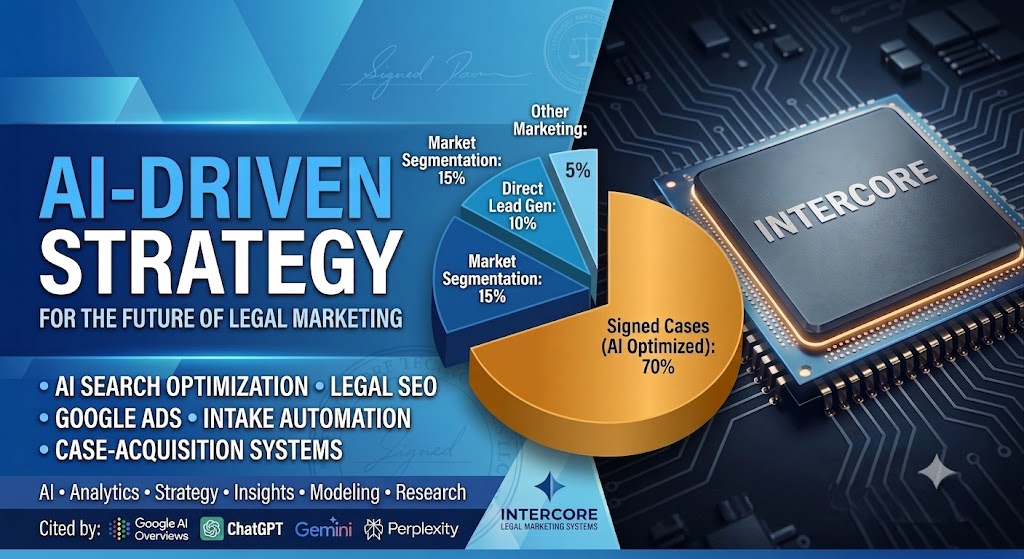
Why AI search visibility wins cases
Clients Ask AI First
A growing share of people now ask ChatGPT, Gemini and Perplexity to research services before they call. If your firm isn't structured for retrieval, you're invisible in that answer.
Legal Is Held Higher
Law is "Your Money or Your Life" — Google and every LLM demand stronger E-E-A-T before they recommend you.
Every Engine, One System
GEO, AEO, AIO and SEO working together across ChatGPT, Gemini, Claude, Perplexity and Google AI Overviews.
Measured & Reported
A live AI-visibility audit and monthly reporting on citations, rankings and — the metric that matters — signed cases.
Compounds Over Time
Technical and schema fixes land in weeks; your AI citation share compounds as topical authority builds.
You Own Everything
Month-to-month, no lock-in, and you own all the site, code, content and data we build. Full stop.
What is LLM Context Windows A Comparison?
model handles long legal documents best for law firm workflows in 2026. SEO GEO AEO AIO E-E-A-T Schema Get Your Free AI Visibility Audit → Calculate Your ROI Guide at a glance Part of GEO for Lawyers Guides in this hub 120 Read time ~44 min Built for AI search + Google ← All GEO for Lawyers 15+ AI platforms covered 24hr Free audit turnaround 100+ Law firms served Key Takeaways Why AI search visibility wins cases AI-first Clients Ask AI First A growing share of people now ask ChatGPT, Gemini and Perplexity to research services before they call. If your firm isn't structured for retrieval, you're invisible in that…
One foundation, every engine
Rank in classic Google Search
What LLM Context Windows A Comparison covers
From audit to signed cases
Technical Audit
A 23-point crawl of architecture, speed, schema and AI-citation gaps — delivered in 24 hours.
Fix & Fortify
We resolve crawl blockers, ship speed and schema fixes, and build the E-E-A-T trust layer.
Amplify Across Engines
Optimize for SEO, GEO, AEO and AI Overviews so you surface wherever clients search.
Measure & Iterate
Live health score, monthly reporting, and the metrics that matter — signed cases.
Dashboards & results
Organic Traffic Growth
Search Console impressions & clicks trending up, post-audit.
Core Web Vitals
LCP, INP and CLS moving into the green.
AI Citation Tracking
Firm appearances across ChatGPT, Gemini & Perplexity.
Estimate your growth
Move the sliders to model what improved AI visibility could mean for your firm.
LLM Context Windows A Comparison — the full guide
model handles long legal documents best for law firm workflows in 2026. SEO GEO AEO AIO E-E-A-T Schema Get Your Free AI Visibility Audit → Calculate Your ROI Guide at a glance Part of GEO for Lawyers Guides in this hub 120 Read time ~44 min Built for AI search + Google ← All GEO for Lawyers 15+ AI platforms covered 24hr Free audit turnaround 100+ Law firms served Key Takeaways Why AI search visibility wins cases AI-first Clients Ask AI First A growing share of people now ask ChatGPT, Gemini and Perplexity to research services before they call. If your firm isn't structured for retrieval, you're invisible in that answer.
YMYL Legal Is Held Higher Law is "Your Money or Your Life" — Google and every LLM demand stronger E-E-A-T before they recommend you. 15+ Every Engine, One System GEO, AEO, AIO and SEO working together across ChatGPT, Gemini, Claude, Perplexity and Google AI Overviews. Live Measured & Reported A live AI-visibility audit and monthly reporting on citations, rankings and — the metric that matters — signed cases.
60–90d Compounds Over Time Technical and schema fixes land in weeks; your AI citation share compounds as topical authority builds. 100% You Own Everything Month-to-month, no lock-in, and you own all the site, code, content and data we build. The Foundation What is LLM Context Windows A Comparison? model handles long legal documents best for law firm workflows in 2026.
If your firm isn't structured for retrieval, you're invisible in that… The Modern Search Stack One foundation, every engine SEO GEO AEO AIO E-E-A-T Fan-Out Rank in classic Google Search ✓ Site architecture & internal linking ✓ Core Web Vitals & mobile-first speed ✓ XML sitemaps, robots & canonical hygiene ✓ On-page optimization for local intent Under the Hood What LLM Context Windows A Comparison covers ✓ Why AI search visibility wins cases ✓ One foundation, every engine ✓ What LLM Context Windows A Comparison covers ✓ From audit to signed cases ✓ Dashboards & results ✓ Estimate your growth ✓ Related toLLM Context Windows A Comparison ✓ LLM Context Windows A Comparison — the full guide The Engagement From audit to signed cases 1 Technical Audit A 23-point crawl of architecture, speed, schema and AI-citation gaps — delivered in 24 hours. 2 Fix & Fortify We resolve crawl blockers, ship speed and schema fixes, and build the E-E-A-T trust layer. 3 Amplify Across Engines Optimize for SEO, GEO, AEO and AI Overviews so you surface wherever clients search.
4 Measure & Iterate Live health score, monthly reporting, and the metrics that matter — signed cases. Proof Dashboards & results Organic Traffic Growth Search Console impressions & clicks trending up, post-audit. Core Web Vitals LCP, INP and CLS moving into the green.
AI Citation Tracking Firm appearances across ChatGPT, Gemini & Perplexity. Interactive Estimate your growth Move the sliders to model what improved AI visibility could mean for your firm. Signed cases / month today 8 Average case value $ 15,000 Projected additional cases / mo + 4 Estimated added annual revenue $720K Get My Free Audit → Explore InterCore Related to LLM Context Windows A Comparison ← All GEO for Lawyers 10 SEO Rules Rewritten for the AI Search Era The rules of law firm SEO have fundamentally changed — this guide reveals 10 traditional SEO principles rewritten by AI search engines like ChatGPT, Perplexity, and Google AI Overviews, and what attorneys must do instead to stay visible.
Read → 90-Day GEO Implementation Plan The 90-Day GEO Implementation Plan: Your Law Firm’s Complete Roadmap to AI Visibility A systematic, quarter-by-quarter framework for optimizing your firm across ChatGPT, Perplexity, Google AI Overviews, and all major generative AI platforms—backed by research and deployed across our 35 nationwide offices. 📋 Table of Contents What Is GEO Implementation?… Read → Answer Engine Optimization (AEO) for Law Firms InterCore Technologies optimizes law firm content for answer engines — Google Featured Snippets, People Also Ask, AI Overviews, and voice search. Read → AEO Repurposing Map: External Sites Strategy for Law Firm AI Visibility How law firms can repurpose content across external sites to maximize AEO impact — a strategic map for getting attorney content cited by AI search engines through strategic distribution. Read → AEO Repurposing: Turn 1 Blog Post into 8 Answer Engine Optimization Signals AEO Repurposing: Turn 1 Blog Post into 8 Answer Engine Optimization Signals The Complete Guide to Multiplying Your AI Platform Visibility Without Creating New Content Author: Scott Wiseman, CEO & Founder, InterCore Technologies Published: January 20, 2025 | Reading Time: 12 minutes | Last Updated: January 20, 2025 📋 Table… Read → AI Search Optimization for Law Firms AI Search Optimization for Law Firms: The Complete 2025 Strategy Guide How Generative Engine Optimization (GEO) is replacing traditional SEO—and why law firms that don’t adapt will become invisible to 62% of future legal consumers Updated October 25, 2025 | 18-minute read ⚡ Executive Summary: What You Need to Know… Read → Services → Areas We Serve → SEO for Lawyers → AEO for Lawyers → Legal Marketing → In depth LLM Context Windows A Comparison — the full guide model handles long legal documents best for law firm workflows in 2026.
The Foundation What is LLM Context Windows A Comparison ? model handles long legal documents best for law firm workflows in 2026. SEO GEO AEO AIO E-E-A-T Schema Get Your Free AI Visibility Audit → Calculate Your ROI Guide at a glance Part of GEO for Lawyers Guides in this hub 120 Read time ~43 min Built for AI search + Google ← All GEO for Lawyers 15+ AI platforms covered 24hr Free audit turnaround 100+ Law firms served Key Takeaways Why AI search visibility wins cases AI-first Clients Ask AI First A growing share of people now ask ChatGPT, Gemini and Perplexity to research services before they call. SEO GEO AEO AIO E-E-A-T Schema Get Your Free AI Visibility Audit → Calculate Your ROI Guide at a glance Part of GEO for Lawyers Guides in this hub 120 Read time ~42 min Built for AI search + Google ← All GEO for Lawyers 15+ AI platforms covered 24hr Free audit turnaround 100+ Law firms served Key Takeaways Why AI search visibility wins cases AI-first Clients Ask AI First A growing share of people now ask ChatGPT, Gemini and Perplexity to research services before they call.
SEO GEO AEO AIO E-E-A-T Schema Get Your Free AI Visibility Audit → Calculate Your ROI Guide at a glance Part of GEO for Lawyers Guides in this hub 120 Read time ~40 min Built for AI search + Google ← All GEO for Lawyers 15+ AI platforms covered 24hr Free audit turnaround 100+ Law firms served Key Takeaways Why AI search visibility wins cases AI-first Clients Ask AI First A growing share of people now ask ChatGPT, Gemini and Perplexity to research services before they call. SEO GEO AEO AIO E-E-A-T Schema Get Your Free AI Visibility Audit → Calculate Your ROI Guide at a glance Part of GEO for Lawyers Guides in this hub 120 Read time ~41 min Built for AI search + Google ← All GEO for Lawyers 15+ AI platforms covered 24hr Free audit turnaround 100+ Law firms served Key Takeaways Why AI search visibility wins cases AI-first Clients Ask AI First A growing share of people now ask ChatGPT, Gemini and Perplexity to research services before they call. If your firm isn't structured for retrieval, you're invisible in that… The Modern Search Stack One foundation, every engine SEO GEO AEO AIO E-E-A-T Fan-Out Rank in classic Google Search ✓ Site architecture & internal linking ✓ Core Web Vitals & mobile-first speed ✓ XML sitemaps, robots & canonical hygiene ✓ On-page optimization for local intent Under the Hood What LLM Context Windows A Comparison covers ✓ Why AI search visibility wins cases ✓ One foundation, every engine ✓ What LLM Context Windows A Comparison covers ✓ From audit to signed cases ✓ Dashboards & results ✓ Estimate your growth ✓ Related to LLM Context Windows A Comparison ✓ LLM Context Windows A Comparison — the full guide The Engagement From audit to signed cases 1 Technical Audit A 23-point crawl of architecture, speed, schema and AI-citation gaps — delivered in 24 hours.
SEO GEO AEO AIO E-E-A-T Schema Get Your Free AI Visibility Audit → Calculate Your ROI Guide at a glance Part of GEO for Lawyers Guides in this hub 120 Read time ~45 min Built for AI search + Google ← All GEO for Lawyers 15+ AI platforms covered 24hr Free audit turnaround 100+ Law firms served Key Takeaways Why AI search visibility wins cases AI-first Clients Ask AI First A growing share of people now ask ChatGPT, Gemini and Perplexity to research services before they call. SEO GEO AEO AIO E-E-A-T Schema Get Your Free AI Visibility Audit → Calculate Your ROI Guide at a glance Part of GEO for Lawyers Guides in this hub 99 Read time ~39 min Built for AI search + Google ← All GEO for Lawyers 15+ AI platforms covered 24hr Free audit turnaround 100+ Law firms served Key Takeaways Why AI search visibility wins cases AI-first Clients Ask AI First A growing share of people now ask ChatGPT, Gemini and Perplexity to research services before they call. If your firm isn't structured for retrieval, you're invisible in that… The Modern Search Stack One foundation, every engine SEO GEO AEO AIO E-E-A-T Fan-Out Rank in classic Google Search ✓ Site architecture & internal linking ✓ Core Web Vitals & mobile-first speed ✓ XML sitemaps, robots & canonical hygiene ✓ On-page optimization for local intent Under the Hood What LLM Context Windows A Comparison covers ✓ Why AI search visibility wins cases ✓ One foundation, every engine ✓ What LLM Context Windows A Comparison covers ✓ From audit to signed cases ✓ Dashboards & results ✓ Estimate your growth ✓ Read it, chapter by chapter ✓ Clients Ask AI First The Engagement From audit to signed cases 1 Technical Audit A 23-point crawl of architecture, speed, schema and AI-citation gaps — delivered in 24 hours.
The Foundation What is LLM Context Windows A Comparison ? ≡ On this page — Why AI visibility wins ▾ Home / GEO for Lawyers / LLM Context Windows A Comparison ← Back to GEO for Lawyers GEO for Lawyers · Law firms only LLM Context Windows A Comparison Compare LLM context windows — GPT-4, Claude, Gemini, Llama. Learn which AI model handles long legal documents best for law firm workflows in 2026. SEO GEO AEO AIO E-E-A-T Schema Get Your Free AI Visibility Audit → Calculate Your ROI Guide at a glance Part of GEO for Lawyers Guides in this hub 99 Read time ~39 min Built for AI search + Google ← All GEO for Lawyers 15+ AI platforms covered 24hr Free audit turnaround 100+ Law… The Modern Search Stack One foundation, every engine SEO GEO AEO AIO E-E-A-T Fan-Out Rank in classic Google Search ✓ Site architecture & internal linking ✓ Core Web Vitals & mobile-first speed ✓ XML sitemaps, robots & canonical hygiene ✓ On-page optimization for local intent Under the Hood What LLM Context Windows A Comparison covers ✓ Why AI search visibility wins cases ✓ One foundation, every engine ✓ What LLM Context Windows A Comparison covers ✓ From audit to signed cases ✓ Dashboards & results ✓ Estimate your growth ✓ Read it, chapter by chapter ✓ Clients Ask AI First The Engagement From audit to signed cases 1 Technical Audit A 23-point crawl of architecture, speed, schema and AI-citation gaps — delivered in 24 hours.
Signed cases / month today 8 Average case value $ 15,000 Projected additional cases / mo + 4 Estimated added annual revenue $720K Get My Free Audit → The complete guide Read it, chapter by chapter The full 28 -chapter guide for law firms — pick any chapter to read it here. Chapter 1 of 28 Why AI search visibility wins cases AI-first Clients Ask AI First A growing share of people now ask ChatGPT, Gemini and Perplexity to research services before they call. The Foundation What is LLM Context Windows A Comparison ?
SEO GEO AEO AIO E-E-A-T Schema Get Your Free AI Visibility Audit → Calculate Your ROI Guide at a glance Part of GEO for Lawyers Guides in this hub 99 Read time ~37 min Built for AI search + Google ← All GEO for Lawyers 15+ AI platforms covered 24hr Free audit turnaround 100+ Law… The Modern Search Stack One foundation, every engine SEO GEO AEO AIO E-E-A-T Fan-Out Rank in classic Google Search ✓ Site architecture & internal linking ✓ Core Web Vitals & mobile-first speed ✓ XML sitemaps, robots & canonical hygiene ✓ On-page optimization for local intent Under the Hood What LLM Context Windows A Comparison covers ✓ Why AI search visibility wins cases ✓ One foundation, every engine ✓ What LLM Context Windows A Comparison covers ✓ From audit to signed cases ✓ Dashboards & results ✓ Estimate your growth ✓ Read it, chapter by chapter ✓ Clients Ask AI First The Engagement From audit to signed cases 1 Technical Audit A 23-point crawl of architecture, speed, schema and AI-citation gaps — delivered in 24 hours. 01 Why AI search visibility wins cases 02 Chapter 2 of 28 What is LLM Context Windows A Comparison? 03 One foundation, every engine 04 What LLM Context Windows A Comparison covers 05 From audit to signed cases 06 Dashboards & results 07 Estimate your growth 08 Read it, chapter by chapter 09 Why AI search visibility wins cases 10 Chapter 3 of 28 One foundation, every engine 11 What LLM Context Windows A Comparison covers 12 From audit to signed cases 13 Dashboards & results 14 Estimate your growth 15 Read it, chapter by chapter 16 Why AI search visibility wins cases 17 What is LLM Context Windows A Comparison?
18 One foundation, every engine 19 Chapter 4 of 28 What LLM Context Windows A Comparison covers 20 From audit to signed cases 21 Clients Ask AI First 22 Every Engine, One System 23 Measured & Reported 24 Compounds Over Time 25 You Own Everything 26 Rank in classic Google Search 27 Technical Audit 28 Core Web Vitals Chapter 1 of 28 Why AI search visibility wins cases AI-first Clients Ask AI First A growing share of people now ask ChatGPT, Gemini and Perplexity to research services before they call. Full stop. model handles long legal documents best for law firm workflows in 2026. If your firm isn't structured for retrieval, you're invisible in that… The Modern Search Stack One foundation, every engine SEO GEO AEO AIO E-E-A-T Fan-Out Rank in classic Google Search ✓ Site architecture & internal linking ✓ Core Web Vitals & mobile-first speed ✓ XML sitemaps, robots & canonical hygiene ✓ On-page optimization for local intent Under the Hood What LLM Context Windows A Comparison covers ✓ Why AI search visibility wins cases ✓ One foundation, every engine ✓ What LLM Context Windows A Comparison covers ✓ Chapter 5 of 28 From audit to signed cases ✓ Dashboards & results ✓ Estimate your growth ✓ Read it, chapter by chapter ✓ Clients Ask AI First The Engagement From audit to signed cases 1 Technical Audit A 23-point crawl of architecture, speed, schema and AI-citation gaps — delivered in 24 hours.
Signed cases / month today 8 Average case value $ 15,000 Projected additional cases / mo + 4 Estimated added annual revenue $720K Get My Free Audit → The complete guide Read it, chapter by chapter The full 35 -chapter guide for law firms — pick any chapter to read it here. 01 Why AI search visibility wins cases 02 One foundation, every engine 03 What LLM Context Windows A Comparison covers 04 From audit to signed cases 05 Chapter 6 of 28 Dashboards & results 06 Estimate your growth 07 Read it, chapter by chapter 08 Why AI search visibility wins cases 09 Chapter 2 of 28 What is LLM Context Windows A Comparison? 10 One foundation, every engine 11 What LLM Context Windows A Comparison covers 12 From audit to signed cases 13 Dashboards & results 14 Chapter 7 of 28 Estimate your growth 15 Read it, chapter by chapter 16 Why AI search visibility wins cases 17 What is LLM Context Windows A Comparison?
18 Chapter 3 of 28 One foundation, every engine 19 What LLM Context Windows A Comparison covers 20 From audit to signed cases 21 Dashboards & results 22 Estimate your growth 23 Chapter 8 of 28 Read it, chapter by chapter 24 Why AI search visibility wins cases 25 One foundation, every engine 26 Chapter 4 of 28 What LLM Context Windows A Comparison covers 27 From audit to signed cases 28 Clients Ask AI First 29 Every Engine, One System 30 Measured & Reported 31 You Own Everything 32 Rank in classic Google Search 33 Technical Audit 34 Every firm’s winnings 35 Why Law Firms Need GEO ( Generative Engine Optimization ) Chapter 1 of 35 Chapter 9 of 28 Why AI search visibility wins cases AI-first Clients Ask AI First A growing share of people now ask ChatGPT, Gemini and Perplexity to research services before they call. SEO GEO AEO AIO E-E-A-T Schema Get Your Free AI Visibility Audit → Calculate Your ROI Guide at a glance Part of GEO for Lawyers Guides in this hub 99 Read time ~39 min Built for AI search + Google ← All GEO for Lawyers 15+ AI platforms covered 24hr Free audit turnaround 100+ Law… The Modern Search Stack Chapter 2 of 35 One foundation, every engine SEO GEO AEO AIO E-E-A-T Fan-Out Rank in classic Google Search ✓ Site architecture & internal linking ✓ Core Web Vitals & mobile-first speed ✓ XML sitemaps, robots & canonical hygiene ✓ On-page optimization for local intent Under the Hood Chapter 3 of 35 What LLM Context Windows A Comparison covers ✓ Why AI search visibility wins cases ✓ One foundation, every engine ✓ What LLM Context Windows A Comparison covers ✓ Chapter 5 of 28 From audit to signed cases ✓ Dashboards & results ✓ Estimate your growth ✓ Read it, chapter by chapter ✓ Clients Ask AI First The Engagement Chapter 4 of 35 From audit to signed cases 1 Technical Audit A 23-point crawl of architecture, speed, schema and AI-citation gaps — delivered in 24 hours. Proof Chapter 5 of 35 Chapter 6 of 28 Dashboards & results Organic Traffic Growth Search Console impressions & clicks trending up, post-audit.
Chapter 6 of 35 Estimate your growth Move the sliders to model what improved AI visibility could mean for your firm. Signed cases / month today 8 Average case value $ 15,000 Projected additional cases / mo + 4 Estimated added annual revenue $720K Get My Free Audit → The complete guide Chapter 7 of 35 Read it, chapter by chapter The full 27 -chapter guide for law firms — pick any chapter to read it here. Chapter 1 of 27 Why AI search visibility wins cases AI-first Clients Ask AI First A growing share of people now ask ChatGPT, Gemini and Perplexity to research services before they call.
SEO GEO AEO AIO E-E-A-T Schema Get Your Free AI Visibility Audit → Calculate Your ROI Guide at a glance Part of GEO for Lawyers Guides in this hub 99 Read time ~38 min Built for AI search + Google ← All GEO for Lawyers 15+ AI platforms covered 24hr Free audit turnaround 100+ Law… The Modern Search Stack One foundation, every engine SEO GEO AEO AIO E-E-A-T Fan-Out Rank in classic Google Search ✓ Site architecture & internal linking ✓ Core Web Vitals & mobile-first speed ✓ XML sitemaps, robots & canonical hygiene ✓ On-page optimization for local intent Under the Hood What LLM Context Windows A Comparison covers ✓ Chapter 8 of 35 Why AI search visibility wins cases ✓ One foundation, every engine ✓ What LLM Context Windows A Comparison covers ✓ From audit to signed cases ✓ Dashboards & results ✓ Chapter 7 of 28 Estimate your growth ✓ Read it, chapter by chapter ✓ Clients Ask AI First The Engagement From audit to signed cases 1 Technical Audit A 23-point crawl of architecture, speed, schema and AI-citation gaps — delivered in 24 hours. Signed cases / month today 8 Average case value $ 15,000 Projected additional cases / mo + 4 Estimated added annual revenue $720K Get My Free Audit → The complete guide Chapter 8 of 28 Read it, chapter by chapter The full 28 -chapter guide for law firms — pick any chapter to read it here. 01 Why AI search visibility wins cases 02 Chapter 2 of 27 Chapter 9 of 35 Chapter 10 of 28 What is LLM Context Windows A Comparison?
03 One foundation, every engine 04 What LLM Context Windows A Comparison covers 05 From audit to signed cases 06 Dashboards & results 07 Estimate your growth 08 Read it, chapter by chapter 09 Chapter 9 of 28 Why AI search visibility wins cases 10 Chapter 3 of 27 Chapter 10 of 35 Chapter 11 of 28 One foundation, every engine 11 What LLM Context Windows A Comparison covers 12 From audit to signed cases 13 Dashboards & results 14 Estimate your growth 15 Read it, chapter by chapter 16 Why AI search visibility wins cases 17 What is LLM Context Windows A Comparison? 18 Chapter 10 of 28 One foundation, every engine 19 Chapter 4 of 27 Chapter 11 of 35 Chapter 12 of 28 What LLM Context Windows A Comparison covers 20 From audit to signed cases 21 Clients Ask AI First 22 Every Engine, One System 23 Measured & Reported 24 You Own Everything 25 Rank in classic Google Search 26 Technical Audit 27 Organic Traffic Growth 28 Core Web Vitals Chapter 1 of 28 Why AI search visibility wins cases AI-first Clients Ask AI First A growing share of people now ask ChatGPT, Gemini and Perplexity to research services before they call. If your firm isn't structured for retrieval, you're invisible in that… The Modern Search Stack One foundation, every engine SEO GEO AEO AIO E-E-A-T Fan-Out Rank in classic Google Search ✓ Site architecture & internal linking ✓ Core Web Vitals & mobile-first speed ✓ XML sitemaps, robots & canonical hygiene ✓ On-page optimization for local intent Under the Hood Chapter 11 of 28 What LLM Context Windows A Comparison covers ✓ Why AI search visibility wins cases ✓ One foundation, every engine ✓ What LLM Context Windows A Comparison covers ✓ Chapter 5 of 27 Chapter 12 of 35 Chapter 13 of 28 From audit to signed cases ✓ Dashboards & results ✓ Estimate your growth ✓ Read it, chapter by chapter ✓ Clients Ask AI First The Engagement Chapter 12 of 28 From audit to signed cases 1 Technical Audit A 23-point crawl of architecture, speed, schema and AI-citation gaps — delivered in 24 hours.
Signed cases / month today 8 Average case value $ 15,000 Projected additional cases / mo + 4 Estimated added annual revenue $720K Get My Free Audit → The complete guide Read it, chapter by chapter The full 36 -chapter guide for law firms — pick any chapter to read it here. 01 Why AI search visibility wins cases 02 One foundation, every engine 03 What LLM Context Windows A Comparison covers 04 From audit to signed cases 05 Chapter 6 of 27 Chapter 13 of 35 Chapter 13 of 28 Chapter 14 of 28 Dashboards & results 06 Estimate your growth 07 Read it, chapter by chapter 08 Why AI search visibility wins cases 09 Chapter 2 of 28 What is LLM Context Windows A Comparison? 10 One foundation, every engine 11 What LLM Context Windows A Comparison covers 12 From audit to signed cases 13 Dashboards & results 14 Chapter 7 of 27 Chapter 14 of 35 Chapter 14 of 28 Chapter 15 of 28 Estimate your growth 15 Read it, chapter by chapter 16 Why AI search visibility wins cases 17 What is LLM Context Windows A Comparison?
18 Chapter 3 of 28 One foundation, every engine 19 What LLM Context Windows A Comparison covers 20 From audit to signed cases 21 Dashboards & results 22 Estimate your growth 23 Chapter 8 of 27 Chapter 15 of 35 Chapter 15 of 28 Chapter 16 of 28 Read it, chapter by chapter 24 Why AI search visibility wins cases 25 What is LLM Context Windows A Comparison? 26 One foundation, every engine 27 Chapter 4 of 28 What LLM Context Windows A Comparison covers 28 Clients Ask AI First 29 Every Engine, One System 30 Measured & Reported 31 You Own Everything 32 Rank in classic Google Search 33 Technical Audit 34 Organic Traffic Growth 35 Every firm’s winnings 36 Why Law Firms Need GEO (Generative Engine Optimization) Chapter 1 of 36 Chapter 9 of 27 Chapter 16 of 35 Chapter 16 of 28 Chapter 17 of 28 Why AI search visibility wins cases AI-first Clients Ask AI First A growing share of people now ask ChatGPT, Gemini and Perplexity to research services before they call. SEO GEO AEO AIO E-E-A-T Schema Get Your Free AI Visibility Audit → Calculate Your ROI Guide at a glance Part of GEO for Lawyers Guides in this hub 99 Read time ~39 min Built for AI search + Google ← All GEO for Lawyers 15+ AI platforms covered 24hr Free audit turnaround 100+ Law… The Modern Search Stack Chapter 2 of 36 Chapter 18 of 28 One foundation, every engine SEO GEO AEO AIO E-E-A-T Fan-Out Rank in classic Google Search ✓ Site architecture & internal linking ✓ Core Web Vitals & mobile-first speed ✓ XML sitemaps, robots & canonical hygiene ✓ On-page optimization for local intent Under the Hood Chapter 3 of 36 Chapter 19 of 28 What LLM Context Windows A Comparison covers ✓ Why AI search visibility wins cases ✓ One foundation, every engine ✓ What LLM Context Windows A Comparison covers ✓ Chapter 5 of 28 From audit to signed cases ✓ Dashboards & results ✓ Estimate your growth ✓ Read it, chapter by chapter ✓ Clients Ask AI First The Engagement Chapter 4 of 36 Chapter 20 of 28 From audit to signed cases 1 Technical Audit A 23-point crawl of architecture, speed, schema and AI-citation gaps — delivered in 24 hours.
Proof Chapter 5 of 36 Chapter 6 of 28 Dashboards & results Organic Traffic Growth Search Console impressions & clicks trending up, post-audit. Chapter 6 of 36 Estimate your growth Move the sliders to model what improved AI visibility could mean for your firm. Signed cases / month today 8 Average case value $ 15,000 Projected additional cases / mo + 4 Estimated added annual revenue $720K Get My Free Audit → The complete guide Chapter 7 of 36 Read it, chapter by chapter The full 28 -chapter guide for law firms — pick any chapter to read it here.
Chapter 1 of 28 Why AI search visibility wins cases AI-first Chapter 21 of 28 Clients Ask AI First A growing share of people now ask ChatGPT, Gemini and Perplexity to research services before they call. SEO GEO AEO AIO E-E-A-T Schema Get Your Free AI Visibility Audit → Calculate Your ROI Guide at a glance Part of GEO for Lawyers Guides in this hub 99 Read time ~38 min Built for AI search + Google ← All GEO for Lawyers 15+ AI platforms covered 24hr Free audit turnaround 100+ Law… The Modern Search Stack One foundation, every engine SEO GEO AEO AIO E-E-A-T Fan-Out Rank in classic Google Search ✓ Site architecture & internal linking ✓ Core Web Vitals & mobile-first speed ✓ XML sitemaps, robots & canonical hygiene ✓ On-page optimization for local intent Under the Hood What LLM Context Windows A Comparison covers ✓ Chapter 8 of 36 Why AI search visibility wins cases ✓ One foundation, every engine ✓ What LLM Context Windows A Comparison covers ✓ From audit to signed cases ✓ Dashboards & results ✓ Chapter 7 of 28 Estimate your growth ✓ Read it, chapter by chapter ✓ Clients Ask AI First The Engagement From audit to signed cases 1 Technical Audit A 23-point crawl of architecture, speed, schema and AI-citation gaps — delivered in 24 hours. Signed cases / month today 8 Average case value $ 15,000 Projected additional cases / mo + 4 Estimated added annual revenue $720K Get My Free Audit → The complete guide Chapter 8 of 28 Read it, chapter by chapter The full 23 -chapter guide for law firms — pick any chapter to read it here.
01 Why AI search visibility wins cases 02 Chapter 2 of 28 Chapter 9 of 36 Chapter 10 of 27 Chapter 17 of 35 Chapter 17 of 28 What is LLM Context Windows A Comparison? 03 One foundation, every engine 04 What LLM Context Windows A Comparison covers 05 From audit to signed cases 06 Dashboards & results 07 Estimate your growth 08 Read it, chapter by chapter 09 Chapter 9 of 28 Why AI search visibility wins cases 10 What is LLM Context Windows A Comparison? 11 Chapter 3 of 28 Chapter 10 of 36 Chapter 11 of 27 Chapter 18 of 35 Chapter 18 of 28 One foundation, every engine 12 What LLM Context Windows A Comparison covers 13 From audit to signed cases 14 Dashboards & results 15 Estimate your growth 16 Read it, chapter by chapter 17 Why AI search visibility wins cases 18 Chapter 10 of 28 One foundation, every engine 19 Chapter 4 of 28 Chapter 11 of 36 Chapter 12 of 27 Chapter 19 of 35 Chapter 19 of 28 What LLM Context Windows A Comparison covers 20 From audit to signed cases 21 Clients Ask AI First 22 Chapter 22 of 28 Every Engine, One System 23 Measured & Reported Chapter 1 of 23 Why AI search visibility wins cases AI-first Clients Ask AI First A growing share of people now ask ChatGPT, Gemini and Perplexity to research services before they call.
SEO GEO AEO AIO E-E-A-T Schema Get Your Free AI Visibility Audit → Calculate Your ROI Guide at a glance Part of GEO for Lawyers Guides in this hub 99 Read time ~36 min Built for AI search + Google ← All GEO for Lawyers 15+ AI platforms covered 24hr Free audit turnaround 100+ Law… The Modern Search Stack One foundation, every engine SEO GEO AEO AIO E-E-A-T Fan-Out Rank in classic Google Search ✓ Site architecture & internal linking ✓ Core Web Vitals & mobile-first speed ✓ XML sitemaps, robots & canonical hygiene ✓ On-page optimization for local intent Under the Hood Chapter 11 of 28 What LLM Context Windows A Comparison covers ✓ Why AI search visibility wins cases ✓ One foundation, every engine ✓ What LLM Context Windows A Comparison covers ✓ Chapter 5 of 28 Chapter 12 of 36 Chapter 13 of 27 Chapter 20 of 35 Chapter 20 of 28 From audit to signed cases ✓ Dashboards & results ✓ Estimate your growth ✓ Read it, chapter by chapter ✓ Clients Ask AI First The Engagement Chapter 12 of 28 From audit to signed cases 1 Technical Audit A 23-point crawl of architecture, speed, schema and AI-citation gaps — delivered in 24 hours. Signed cases / month today 8 Average case value $ 15,000 Projected additional cases / mo + 4 Estimated added annual revenue $720K Get My Free Audit → The complete guide Read it, chapter by chapter The full 24 -chapter guide for law firms — pick any chapter to read it here. 01 Why AI search visibility wins cases 02 Chapter 2 of 23 What is LLM Context Windows A Comparison?
03 One foundation, every engine 04 What LLM Context Windows A Comparison covers 05 From audit to signed cases 06 Chapter 6 of 28 Chapter 13 of 36 Chapter 13 of 28 Chapter 14 of 27 Chapter 21 of 35 Dashboards & results 07 Estimate your growth 08 Read it, chapter by chapter 09 Why AI search visibility wins cases 10 Chapter 3 of 23 One foundation, every engine 11 What LLM Context Windows A Comparison covers 12 From audit to signed cases 13 Dashboards & results 14 Chapter 7 of 28 Chapter 14 of 36 Chapter 14 of 28 Chapter 15 of 27 Chapter 22 of 35 Estimate your growth 15 Read it, chapter by chapter 16 What is LLM Context Windows A Comparison? 17 One foundation, every engine 18 Chapter 4 of 23 What LLM Context Windows A Comparison covers 19 From audit to signed cases 20 Dashboards & results 21 Chapter 21 of 28 Clients Ask AI First 22 Every Engine, One System 23 Chapter 23 of 28 Measured & Reported 24 Compounds Over Time Chapter 1 of 24 Why AI search visibility wins cases AI-first Clients Ask AI First A growing share of people now ask ChatGPT, Gemini and Perplexity to research services before they call. SEO GEO AEO AIO E-E-A-T Schema Get Your Free AI Visibility Audit → Calculate Your ROI Guide at a glance Part of GEO for Lawyers Guides in this hub 98 Read time ~35 min Built for AI search + Google ← All GEO for Lawyers 15+ AI platforms covered 24hr Free audit turnaround 100+ Law firms served Key Takeaways Why AI search visibility wins cases AI-first Clients Ask AI First A growing share of people now ask ChatGPT, Gemini and Perplexity to research services before they call.
If your firm isn't structured for retrieval, you're invisible in that… The Modern Search Stack One foundation, every engine SEO GEO AEO AIO E-E-A-T Fan-Out Rank in classic Google Search ✓ Site architecture & internal linking ✓ Core Web Vitals & mobile-first speed ✓ XML sitemaps, robots & canonical hygiene ✓ On-page optimization for local intent Under the Hood What LLM Context Windows A Comparison covers ✓ Why AI search visibility wins cases ✓ One foundation, every engine ✓ What LLM Context Windows A Comparison covers ✓ Chapter 5 of 23 From audit to signed cases ✓ Dashboards & results ✓ Estimate your growth ✓ Chapter 8 of 28 Chapter 15 of 36 Chapter 15 of 28 Chapter 16 of 27 Chapter 23 of 35 Read it, chapter by chapter ✓ Clients Ask AI First The Engagement From audit to signed cases 1 Technical Audit A 23-point crawl of architecture, speed, schema and AI-citation gaps — delivered in 24 hours. Signed cases / month today 8 Average case value $ 15,000 Projected additional cases / mo + 4 Estimated added annual revenue $720K Get My Free Audit → The complete guide Read it, chapter by chapter The full 19 -chapter guide for law firms — pick any chapter to read it here. 01 Chapter 9 of 28 Chapter 16 of 36 Chapter 16 of 28 Chapter 17 of 27 Chapter 24 of 35 Why AI search visibility wins cases 02 One foundation, every engine 03 What LLM Context Windows A Comparison covers 04 From audit to signed cases 05 Chapter 6 of 23 Dashboards & results 06 Estimate your growth 07 Read it, chapter by chapter 08 Chapter 2 of 24 Chapter 10 of 28 Chapter 17 of 36 Chapter 17 of 28 What is LLM Context Windows A Comparison?
09 Chapter 18 of 27 Chapter 25 of 35 One foundation, every engine 10 What LLM Context Windows A Comparison covers 11 From audit to signed cases 12 Dashboards & results 13 Chapter 7 of 23 Estimate your growth 14 Clients Ask AI First 15 Chapter 22 of 28 Every Engine, One System 16 Measured & Reported 17 Chapter 24 of 28 Compounds Over Time 18 Every firm’s winnings 19 Why Law Firms Need GEO (Generative Engine Optimization) Chapter 1 of 19 Why AI search visibility wins cases AI-first Clients Ask AI First A growing share of people now ask ChatGPT, Gemini and Perplexity to research services before they call. SEO GEO AEO AIO E-E-A-T Schema Get Your Free AI Visibility Audit → Calculate Your ROI Guide at a glance Part of GEO for Lawyers Guides in this hub 108 Read time ~40 min Built for AI search + Google ← All GEO for Lawyers 15+ AI platforms covered 24hr Free audit turnaround 100+ Law… The Modern Search Stack Chapter 2 of 19 Chapter 3 of 24 Chapter 11 of 28 Chapter 18 of 36 Chapter 18 of 28 One foundation, every engine SEO GEO AEO AIO E-E-A-T Fan-Out Rank in classic Google Search ✓ Site architecture & internal linking ✓ Core Web Vitals & mobile-first speed ✓ XML sitemaps, robots & canonical hygiene ✓ On-page optimization for local intent Under the Hood Chapter 3 of 19 Chapter 4 of 24 Chapter 12 of 28 Chapter 19 of 36 Chapter 19 of 28 Chapter 19 of 27 Chapter 26 of 35 What LLM Context Windows A Comparison covers ✓ Why AI search visibility wins cases ✓ One foundation, every engine ✓ What LLM Context Windows A Comparison covers ✓ From audit to signed cases ✓ Dashboards & results ✓ Estimate your growth ✓ Related to LLM Context Windows A Comparison ✓ LLM Context Windows A Comparison — the full guide The Engagement Chapter 4 of 19 Chapter 5 of 24 Chapter 13 of 28 Chapter 20 of 36 Chapter 20 of 28 Chapter 20 of 27 Chapter 27 of 35 From audit to signed cases 1 Technical Audit A 23-point crawl of architecture, speed, schema and AI-citation gaps — delivered in 24 hours. Proof Chapter 5 of 19 Dashboards & results Organic Traffic Growth Search Console impressions & clicks trending up, post-audit.
Chapter 6 of 19 Estimate your growth Move the sliders to model what improved AI visibility could mean for your firm. Signed cases / month today 8 Average case value $ 15,000 Projected additional cases / mo + 4 Estimated added annual revenue $720K Get My Free Audit → The complete guide Chapter 7 of 19 Chapter 8 of 23 Read it, chapter by chapter The full 11 -chapter guide for law firms — pick any chapter to read it here. Chapter 1 of 11 What is LLM Context Windows A Comparison? × Compare LLM context windows — GPT-4, Claude, Gemini, Llama.
How does this help my firm get cited by AI? + What does it cost, and how fast are results? + Explore InterCore Related to LLM Context Windows A Comparison ← All GEO for Lawyers 10 SEO Rules Rewritten for the AI Search Era The rules of law firm SEO have fundamentally changed — this guide reveals 10 traditional SEO principles rewritten by AI search engines like ChatGPT, Perplexity, and Google AI Overviews, and what attorneys must do instead to stay visible. SEO GEO AEO AIO E-E-A-T Schema Get Your Free AI Visibility Audit → Calculate Your ROI Guide at a glance Part of GEO for Lawyers Guides in this hub 150 Read time ~40 min Built for AI search + Google ← All GEO for Lawyers 15+ AI platforms covered 24hr Free audit turnaround 100+ Law firms served Key Takeaways Chapter 9 of 23 Why AI search visibility wins cases AI-first Chapter 21 of 28 Chapter 21 of 27 Chapter 28 of 35 Clients Ask AI First A growing share of people now ask ChatGPT, Gemini and Perplexity to research services before they call. If your firm isn't structured for retrieval, you're invisible in that… The Modern Search Stack Chapter 2 of 11 One foundation, every engine SEO GEO AEO AIO E-E-A-T Fan-Out Rank in classic Google Search ✓ Site architecture & internal linking ✓ Core Web Vitals & mobile-first speed ✓ XML sitemaps, robots & canonical hygiene ✓ On-page optimization for local intent Under the Hood Chapter 3 of 11 What LLM Context Windows A Comparison covers ✓ Why AI search visibility wins cases ✓ One foundation, every engine ✓ What LLM Context Windows A Comparison covers ✓ From audit to signed cases ✓ Chapter 6 of 24 Chapter 14 of 28 Chapter 21 of 36 Dashboards & results ✓ Estimate your growth ✓ Related toLLM Context Windows A Comparison ✓ LLM Context Windows A Comparison — the full guide The Engagement Chapter 4 of 11 From audit to signed cases 1 Technical Audit A 23-point crawl of architecture, speed, schema and AI-citation gaps — delivered in 24 hours.
SEO GEO AEO AIO E-E-A-T Schema Get Your Free AI Visibility Audit → Calculate Your ROI Guide at a glance Part of GEO for Lawyers Guides in this hub 150 Read time ~43 min Built for AI search + Google ← All GEO for Lawyers 15+ AI platforms covered 24hr Free audit turnaround 100+ Law firms served Key Takeaways Why AI search visibility wins cases AI-first Clients Ask AI First A growing share of people now ask ChatGPT, Gemini and Perplexity to research services before they call. SEO GEO AEO AIO E-E-A-T Schema Get Your Free AI Visibility Audit → Calculate Your ROI Guide at a glance Part of GEO for Lawyers Guides in this hub 99 Read time ~45 min Built for AI search + Google ← All GEO for Lawyers 15+ AI platforms covered 24hr Free audit turnaround 100+ Law firms served Key Takeaways Why AI search visibility wins cases AI-first Clients Ask AI First A growing share of people now ask ChatGPT, Gemini and Perplexity to research services before they call. If your firm isn't structured for retrieval, you're invisible in that… The Modern Search Stack One foundation, every engine SEO GEO AEO AIO E-E-A-T Fan-Out Rank in classic Google Search ✓ Site architecture & internal linking ✓ Core Web Vitals & mobile-first speed ✓ XML sitemaps, robots & canonical hygiene ✓ On-page optimization for local intent Under the Hood What LLM Context Windows A Comparison covers ✓ Why AI search visibility wins cases ✓ One foundation, every engine ✓ What LLM Context Windows A Comparison covers ✓ From audit to signed cases ✓ Chapter 5 of 11 Dashboards & results ✓ Chapter 7 of 24 Chapter 15 of 28 Chapter 22 of 36 Estimate your growth ✓ Read it, chapter by chapter ✓ Clients Ask AI First The Engagement From audit to signed cases 1 Technical Audit A 23-point crawl of architecture, speed, schema and AI-citation gaps — delivered in 24 hours.
SEO GEO AEO AIO E-E-A-T Schema Get Your Free AI Visibility Audit → Calculate Your ROI Guide at a glance Part of GEO for Lawyers Guides in this hub 99 Read time ~40 min Built for AI search + Google ← All GEO for Lawyers 15+ AI platforms covered 24hr Free audit turnaround 100+ Law firms served Key Takeaways Why AI search visibility wins cases AI-first Clients Ask AI First A growing share of people now ask ChatGPT, Gemini and Perplexity to research services before they call. Signed cases / month today 8 Average case value $ 15,000 Projected additional cases / mo + 4 Estimated added annual revenue $720K Get My Free Audit → The complete guide Chapter 8 of 24 Chapter 16 of 28 Chapter 23 of 36 Read it, chapter by chapter The full 41 -chapter guide for law firms — pick any chapter to read it here. 01 Why AI search visibility wins cases 02 One foundation, every engine 03 What LLM Context Windows A Comparison covers 04 From audit to signed cases 05 Dashboards & results 06 Chapter 6 of 11 Estimate your growth 07 Read it, chapter by chapter 08 Chapter 9 of 24 Chapter 17 of 28 Chapter 24 of 36 Why AI search visibility wins cases 09 Chapter 8 of 19 Chapter 10 of 23 What is LLM Context Windows A Comparison?
10 One foundation, every engine 11 What LLM Context Windows A Comparison covers 12 From audit to signed cases 13 Dashboards & results 14 Estimate your growth 15 Read it, chapter by chapter 16 Why AI search visibility wins cases 17 Chapter 9 of 19 Chapter 10 of 24 Chapter 11 of 23 One foundation, every engine 18 What LLM Context Windows A Comparison covers 19 From audit to signed cases 20 Dashboards & results 21 Estimate your growth 22 Read it, chapter by chapter 23 Why AI search visibility wins cases 24 Chapter 18 of 28 Chapter 25 of 36 What is LLM Context Windows A Comparison? 25 One foundation, every engine 26 Chapter 10 of 19 Chapter 11 of 24 Chapter 12 of 23 What LLM Context Windows A Comparison covers 27 From audit to signed cases 28 Clients Ask AI First 29 Chapter 22 of 28 Chapter 22 of 27 Chapter 29 of 35 Every Engine, One System 30 Chapter 23 of 28 Measured & Reported 31 Compounds Over Time 32 Rank in classic Google Search 33 Technical Audit 34 Organic Traffic Growth 35 Core Web Vitals 36 Why Law Firms Need GEO ( Generative Engine Optimization ) 37 Chapter 7 of 11 Clients Ask AI First A growing share of people now ask ChatGPT, Gemini and Perplexity to research services before they call. SEO GEO AEO AIO E-E-A-T Schema Get Your Free AI Visibility Audit → Calculate Your ROI Guide at a glance Part of GEO for Lawyers Guides in this hub 98 Read time ~41 min Built for AI search + Google ← All GEO for Lawyers 15+ AI platforms covered 24hr Free audit turnaround 100+ Law… The Modern Search Stack Chapter 2 of 41 Chapter 19 of 28 Chapter 26 of 36 One foundation, every engine SEO GEO AEO AIO E-E-A-T Fan-Out Rank in classic Google Search ✓ Site architecture & internal linking ✓ Core Web Vitals & mobile-first speed ✓ XML sitemaps, robots & canonical hygiene ✓ On-page optimization for local intent Under the Hood Chapter 3 of 41 Chapter 20 of 28 Chapter 27 of 36 What LLM Context Windows A Comparison covers ✓ Why AI search visibility wins cases ✓ One foundation, every engine ✓ What LLM Context Windows A Comparison covers ✓ Chapter 11 of 19 Chapter 12 of 24 Chapter 13 of 23 From audit to signed cases ✓ Dashboards & results ✓ Estimate your growth ✓ Read it, chapter by chapter ✓ Chapter 21 of 28 Chapter 28 of 36 Clients Ask AI First The Engagement Chapter 4 of 41 From audit to signed cases 1 Technical Audit A 23-point crawl of architecture, speed, schema and AI-citation gaps — delivered in 24 hours.
Proof Chapter 5 of 41 Chapter 12 of 19 Chapter 13 of 24 Chapter 14 of 23 Dashboards & results Organic Traffic Growth Search Console impressions & clicks trending up, post-audit. Chapter 6 of 41 Estimate your growth Move the sliders to model what improved AI visibility could mean for your firm. Signed cases / month today 8 Average case value $ 15,000 Projected additional cases / mo + 4 Estimated added annual revenue $720K Get My Free Audit → The complete guide Chapter 7 of 41 Read it, chapter by chapter The full 29 -chapter guide for law firms — pick any chapter to read it here.
Chapter 1 of 29 Why AI search visibility wins cases AI-first Clients Ask AI First A growing share of people now ask ChatGPT, Gemini and Perplexity to research services before they call. SEO GEO AEO AIO E-E-A-T Schema Get Your Free AI Visibility Audit → Calculate Your ROI Guide at a glance Part of GEO for Lawyers Guides in this hub 98 Read time ~39 min Built for AI search + Google ← All GEO for Lawyers 15+ AI platforms covered 24hr Free audit turnaround 100+ Law firms served Key Takeaways Chapter 8 of 41 Why AI search visibility wins cases AI-first Clients Ask AI First A growing share of people now ask ChatGPT, Gemini and Perplexity to research services before they call. Signed cases / month today 8 Average case value $ 15,000 Projected additional cases / mo + 4 Estimated added annual revenue $720K Get My Free Audit → The complete guide Read it, chapter by chapter The full 34 -chapter guide for law firms — pick any chapter to read it here.
Sources & references Google Search Central — SEO docs ↗ Google — AI Overviews & Search ↗ American Bar Association ↗ Schema.org — structured data ↗ ★ Leading AI marketing agency for law firms — since 2002 #1 GEO Pioneer First & only agency specializing in Generative Engine Optimization 24 years Serving law firms & Fortune 500s since 2002 100+ firms Law firms helped dominate their markets Fortune 500 AI built for Marriott, Six Flags, NYPD & Atos Certified platform partners Premier Google Partner Microsoft Advertising Meta Business Partner Share 𝕏 in f r wa tg ✉ ⧉ caption Scott Wiseman CEO / Founder, InterCore Technologies · AI-Powered Marketing for Law Firms Since 2002 Scott is a former Google Marketing Director with a background in computer science and business. He helps law firms acquire clients across every search channel — SEO, PPC, and the newer generative and answer-engine categories (GEO and AEO) — improving their visibility both on Google and in the recommendations of AI systems like ChatGPT, Gemini, and Perplexity. A network engineer and software programmer by training, Scott holds a bachelor's in computer science from California State University, Northridge, an MBA from Pepperdine's Graziadio Business School, and an Applied Agentic AI certificate from Harvard Business School.
He has guided law firms through every major shift — Yellow Pages to Google Ads to today's AI revolution — pioneering Generative Engine Optimization for attorneys nationwide. Connect on LinkedIn Read full bio → Watch · Short Why Law Firms Need GEO (Generative Engine Optimization) 100+ law firms served 2002 law-firm-only since More on the InterCore channel — @IntercoreAI ↗ Ready to turn AI search into signed cases? Get your free 23-point AI visibility report — delivered in 24 hours.