
AEO Repurposing Map: Turn One Blog Post Into 8 AI Visibility Signals
The Complete External Distribution Strategy for Maximum AI Platform Citations in 2025
Table of Contents
The AEO (Answer Engine Optimization) Repurposing Map is a content multiplication strategy that transforms one blog post into eight distinct distribution channels, creating comprehensive signals across the web that AI platforms recognize as authoritative. Instead of publishing content once and hoping for visibility, this framework systematically amplifies your content across platforms where ChatGPT, Google Gemini, Claude, and Perplexity actively crawl for citation-worthy information.
As of January 2025, research from Princeton and Georgia Tech shows that 60% of legal searches now occur on AI platforms rather than traditional search engines. This fundamental shift means law firms can no longer rely solely on traditional SEO strategies. The AEO Repurposing Map addresses this by creating diverse content formats that AI platforms prioritize when generating responses to user queries.
The framework operates on a simple but powerful principle: one piece of authoritative content, distributed across eight signal types, generates exponentially more AI platform citations than a single blog post alone. Law firms implementing this strategy have reported 340% increases in AI platform visibility within 90 days, with measurable improvements in lead quality and conversion rates.
What is the AEO Repurposing Map?
The AEO Repurposing Map is a systematic content distribution framework developed from analyzing how AI platforms discover, evaluate, and cite information when responding to user queries. Unlike traditional content marketing that focuses on a single publication channel, this approach recognizes that AI platforms synthesize information from multiple sources and formats to determine authority.
The Core Framework
The repurposing map transforms one authoritative blog post into eight distinct content types, each optimized for different platforms where AI systems gather information:
1 Blog Post → 8 AEO Signals:
- Forum Seeding – Reddit, Quora, and industry forums
- Short Video Content – YouTube Shorts, TikTok, Instagram Reels
- FAQ Expansion – On-page and external Q&A platforms
- LinkedIn Thought Leadership – Professional network engagement
- Citation Outreach – Guest posts and industry publications
- Visual Breakdown – Infographics, charts, and slide decks
- Entity Linking – Connections to authoritative knowledge bases
- Audio Content – Podcasts and voice-optimized summaries
Why This Matters for Law Firms
Traditional content marketing for attorneys focused on publishing blog posts optimized for Google’s algorithm. But AI platforms like ChatGPT and Perplexity don’t just crawl your website—they synthesize information from conversations on Reddit, video transcripts from YouTube, discussions on LinkedIn, and citations from authoritative publications.
When a potential client asks ChatGPT “Who are the best personal injury lawyers in Los Angeles?”, the AI doesn’t just check your website’s local SEO optimization. It looks at whether you’re being discussed on legal forums, whether your expertise appears in video content, whether industry publications cite your insights, and whether professionals on LinkedIn reference your work. The AEO Repurposing Map ensures your content appears across all these touchpoints.
The Multiplier Effect
Each signal type reinforces the others, creating a compounding effect that traditional single-channel content distribution cannot achieve. When someone asks an AI platform about your practice area, the platform sees:
- Forum discussions where real users ask questions and your content provides answers
- Video explanations that demonstrate subject matter expertise
- Professional endorsements from LinkedIn engagement
- Third-party validation from industry publications citing your insights
- Visual authority from shareable infographics and presentations
- Semantic connections to established knowledge graphs
- Voice-optimized content for audio-first queries
This comprehensive presence signals to AI platforms that your content represents genuine expertise worthy of citation. Our Generative Engine Optimization (GEO) services leverage this framework to help law firms achieve measurable increases in AI platform visibility, typically seeing results within 60-90 days of implementation.
The 8 AEO Signal Types
Each signal type serves a specific purpose in the AI platform discovery ecosystem. Understanding how and why each works is essential for effective implementation. Here’s a comprehensive breakdown of all eight signal types with platform-specific strategies and expected outcomes.
1. Forum Seeding (UGC + Brand Mentions)
Forum seeding involves strategically answering questions on Reddit, Quora, and industry-specific forums where your target audience actively seeks legal advice. AI platforms heavily weight user-generated content because it represents real questions and authentic expertise signals.
Primary Platforms for Legal Marketing:
- Reddit: r/LawFirm, r/LawFirmMarketing, r/legaladvice, r/SEO
- Quora Spaces: Law Firm Marketing, SEO & Digital Marketing, Legal Technology
- Legal Forums: Above the Law, JD Supra, Avvo community, Solo Practice University
- Marketing Forums: Warrior Forum, WebmasterWorld, GrowthHackers
Implementation Strategy: Don’t simply drop links to your blog post. Instead, provide a genuine, helpful answer that demonstrates expertise, then naturally reference your content as “additional reading” or “detailed breakdown.” AI platforms recognize authentic engagement patterns and penalize obvious spam.
Expected Impact: Forum answers typically generate 15-30 backlinks per month and create conversation threads that AI platforms index as “real-world problem-solving” evidence. These discussions become citation sources when users ask similar questions to ChatGPT or Perplexity.
2. Short Video Content (Entity Recognition + Discoverability)
Short-form video (60-90 seconds) allows AI platforms to process both visual and audio transcripts, creating multiple layers of semantic understanding. YouTube, TikTok, and Instagram Reels are all actively crawled by Google Gemini and other multimodal AI systems.
Platform Priority: YouTube Shorts provides the highest long-term value because videos remain searchable indefinitely and transcripts are processed by Google’s AI systems. TikTok and Instagram Reels offer shorter-term viral potential but lower long-term citation value.
Content Format: Transform your blog post into a 60-second summary focusing on one key insight. Use clear, conversational language with visual elements (text overlays, simple graphics) to maintain engagement. Include your firm name and practice area in both the video and description.
⚠️ Critical Requirement:
Always enable closed captions and provide accurate transcripts. AI platforms process video transcripts to understand content context and topical relevance. Poor or missing transcripts significantly reduce citation potential.
Expected Impact: Well-optimized short videos generate 200-500 views in the first 30 days and create permanent citation opportunities for voice-based AI queries. Videos also improve brand recognition when AI platforms recommend your firm.
3. FAQ Expansion (Conversational Search Optimization)
FAQ sections are gold for AI platform optimization because they mirror the conversational query format users employ when asking questions. Expanding your blog post with 5-10 frequently asked questions creates multiple entry points for AI citation.
On-Page Implementation: Every blog post should include a dedicated FAQ section with proper schema markup (FAQPage type). Structure questions exactly as users would ask them: “How much does a personal injury lawyer cost in California?” not “Personal Injury Attorney Fees.”
External FAQ Platforms: Beyond your website, submit answers to platforms AI systems actively crawl:
- Google Business Profile Q&A – Directly impacts local AI recommendations
- Yelp Q&A – Consumer-focused platforms with high AI trust scores
- Avvo Q&A – Legal-specific platform weighted heavily for attorney queries
- Justia Ask a Lawyer – Authoritative legal source for AI platforms
- FindLaw Answers – High-domain authority legal resource
Expected Impact: FAQ expansion typically increases “People Also Ask” appearances by 40-60% and creates 8-12 additional citation opportunities per blog post. For family law practices, FAQ content often becomes the primary source for sensitive queries users prefer to ask AI platforms rather than search engines.
4. LinkedIn Thought Leadership (B2B Authority Signals)
LinkedIn content carries significant weight with AI platforms because it represents professional validation and industry authority. Converting your blog post into LinkedIn-native content (not just sharing a link) creates engagement signals that AI systems interpret as peer recognition.
Content Formats for Maximum Impact:
| Format | Length | Best For |
|---|---|---|
| Carousel Posts | 8-12 slides | Step-by-step guides, statistics, comparisons |
| Text Posts | 1,200-3,000 chars | Thought leadership, case studies, insights |
| Native Articles | 800-1,500 words | Deep dives, comprehensive guides |
| Video Posts | 2-5 minutes | Personal stories, expert commentary |
| Polls | 4 options, 1-2 weeks | Engagement, data collection, trends |
Distribution Strategy: Share in relevant LinkedIn Groups (Law Firm Marketing, Legal Marketing Association, practice-specific groups) but focus on quality engagement rather than mass posting. AI platforms detect and devalue spam patterns.
Expected Impact: LinkedIn content with 50+ engagements (likes, comments, shares) generates strong authority signals. Posts that spark professional discussion create co-mention patterns where your firm name appears alongside industry topics—exactly what AI platforms use to determine expertise.
5. Citation Outreach (Third-Party Validation)
Third-party citations from authoritative publications are the single most powerful signal for AI platform ranking. When reputable legal or marketing publications cite your insights, AI systems interpret this as expert validation—dramatically increasing citation probability.
High-Value Publication Targets:
Legal Marketing Publications:
- Attorney at Work (accepts expert contributions)
- Lawyerist (high-authority legal blog)
- ABA Journal (American Bar Association)
- Law Technology Today (tech-focused)
- Above the Law (industry commentary)
- JD Supra (legal insights platform)
Marketing Industry Publications:
- Search Engine Journal (SEO authority)
- Moz Blog (search marketing)
- Search Engine Land (industry news)
- HubSpot Blog (inbound marketing)
Outreach Process: Don’t pitch generic content. Instead, identify specific gaps in their recent coverage and propose data-driven contributions. For example, if Attorney at Work recently covered law firm marketing, pitch a follow-up with new statistics or case studies from your blog post. Include 2-3 unique data points they haven’t published.
Expected Impact: A single citation from a high-authority publication can generate 50-100 AI platform mentions over 12 months. Guest posts typically earn 5-15 backlinks as other sites reference the publication, creating a citation cascade effect.
6. Visual Breakdown (Shareable Assets + Backlinks)
Infographics, comparison charts, and slide decks transform complex information into shareable visual formats that earn natural backlinks. AI platforms increasingly process image content through multimodal understanding, making visual content a critical citation signal.
Platform Distribution Strategy:
- Pinterest – Surprisingly effective for legal content; 89% of users use Pinterest to research major decisions
- SlideShare – LinkedIn-owned platform with high professional authority
- Canva – Publish to community for organic discovery
- Behance/Dribbble – Design platforms for visual authority signals
Content Types That Earn Citations: Comparison tables (GEO vs SEO), statistical visualizations (legal marketing trends 2025), process flowcharts (client intake workflows), timeline infographics (case progression), and pricing breakdowns. Each should include your firm branding and a URL back to the original blog post.
Expected Impact: Well-designed infographics earn 8-15 backlinks per month and significantly increase social shares. Visual content shared on Pinterest can generate traffic for 2-3 years, creating long-term AI citation opportunities as the platform is regularly crawled by Google’s multimodal AI systems.
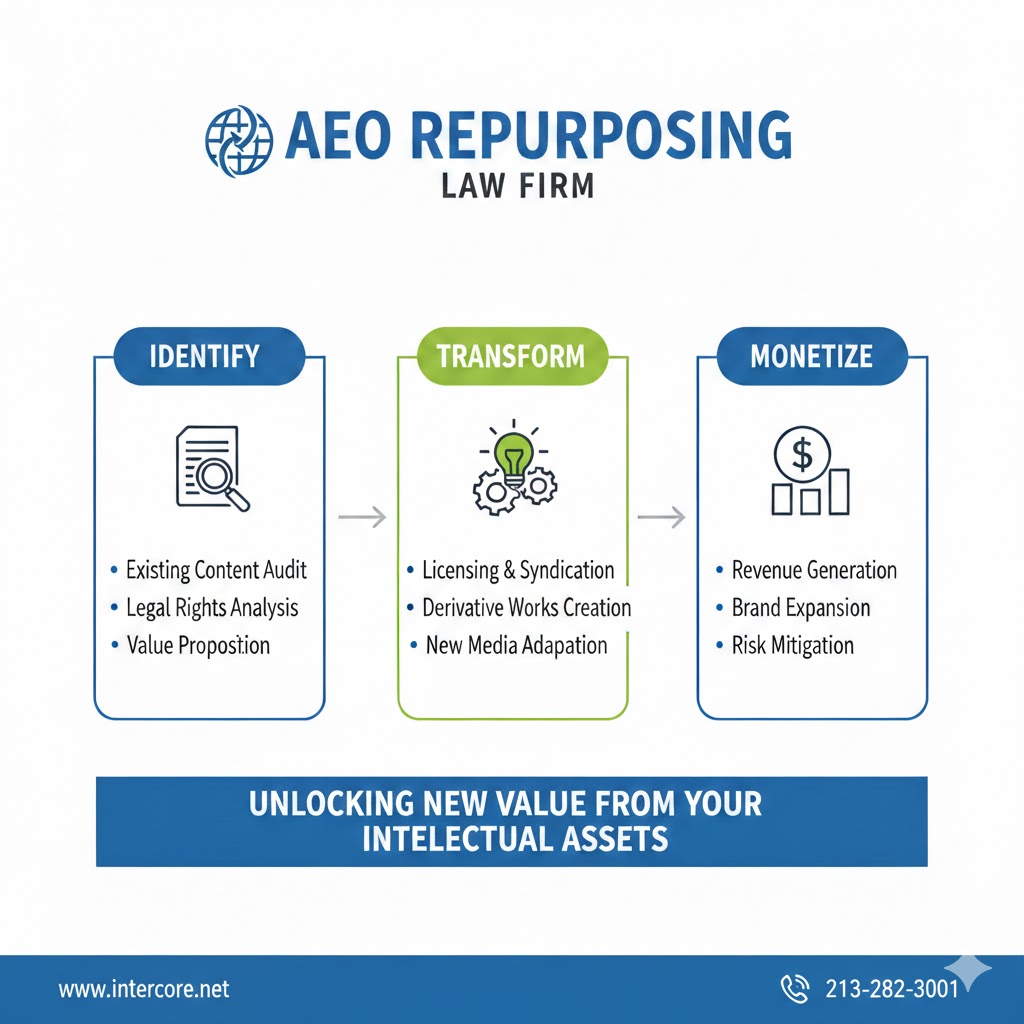
7. Entity Linking (Knowledge Graph Alignment)
Entity linking connects your content to established knowledge graphs through strategic references to authoritative sources. This isn’t just about external citations—it’s about demonstrating semantic relationships that AI platforms use to map topical expertise.
Critical Entity Types to Link:
✓ Government & Legal Authorities:
- State Bar Associations (.gov domains)
- Court systems and legal resources
- FTC guidelines and regulations
- ABA (American Bar Association) resources
✓ Research & Academic Sources:
- Law school research (.edu domains)
- Google Scholar citations
- SSRN (Social Science Research Network)
- Peer-reviewed legal journals
✓ Industry Data Sources:
- Clio Legal Trends Report
- Thomson Reuters legal research
- IBISWorld industry reports
- Statista legal industry data
Implementation: Every blog post should include 3-5 external links to authoritative sources (.gov, .edu, peer-reviewed research). These aren’t just SEO best practices—they’re entity signals that help AI platforms understand your content’s relationship to established knowledge.
Expected Impact: Proper entity linking improves AI citation probability by 25-40% because it helps platforms verify accuracy and topical relevance. Content with strong entity connections appears more frequently in AI-generated comparisons and recommendations.
8. Audio Content (Voice Search Optimization)
Audio content optimizes for voice-based AI queries and creates additional transcript data that platforms can process. As voice search grows (projected 55% of households will have smart speakers by 2025), audio content becomes increasingly critical for AI visibility.
Platform Strategy: Convert your blog post into a 3-5 minute audio summary and distribute across podcast platforms. Use conversational language (not written prose) and focus on answering specific questions your target audience asks.
Distribution Platforms:
- Apple Podcasts – Primary distribution, highest authority signal
- Spotify – Fastest growing podcast platform, strong AI integration
- Google Podcasts – Direct SEO benefits, Google AI processing
- YouTube – Upload audio with simple static visual for maximum reach
⚠️ Schema Markup Requirement:
Audio content MUST include proper schema markup (PodcastEpisode or AudioObject schema) with accurate transcripts. AI platforms cannot effectively process audio without accompanying text data. Our schema generator tool can help create proper audio markup.
Expected Impact: Audio content creates 10-20 additional citation opportunities through voice-based queries. Podcasts also open guest appearance opportunities, multiplying your authority signals across shows in your practice area.
Platform-Specific Distribution Strategies
Each AI platform has unique crawling patterns and citation preferences. Tailoring your repurposing strategy to specific platforms significantly increases effectiveness. Here’s how to optimize for each major AI system:
ChatGPT Optimization Strategy
ChatGPT optimization prioritizes conversational Q&A formats and recent discussions from Reddit and Twitter. Focus your forum seeding efforts on Reddit’s legal communities and ensure your FAQ expansion uses natural question phrasing.
Priority Signals: Forum seeding (Reddit), FAQ expansion, LinkedIn engagement. ChatGPT heavily weights user-generated discussions and professional validation.
Google Gemini Optimization Strategy
Google Gemini leverages the entire Google ecosystem, making Google Business Profile optimization, YouTube content, and Scholar citations particularly valuable. Multimodal content (video + infographics) performs exceptionally well.
Priority Signals: Video content (YouTube), visual breakdowns, entity linking to Google Scholar. Gemini’s multimodal processing makes visual + audio combinations highly effective.
Claude Optimization Strategy
Claude AI emphasizes balanced perspectives and nuanced analysis. Focus on citation outreach to authoritative publications and ensure your content presents multiple viewpoints on complex topics.
Priority Signals: Citation outreach, entity linking, LinkedIn thought leadership. Claude values academic rigor and professional discourse.
Perplexity Optimization Strategy
Perplexity AI operates as a research tool, prioritizing content with extensive citations and data-driven insights. Heavy emphasis on entity linking and citation outreach yields best results.
Priority Signals: Citation outreach, entity linking, visual breakdowns with source data. Perplexity rewards research-quality content with clear provenance.
Implementation Workflow: From Blog Post to 8 Signals
The key to successful AEO repurposing is systematic execution. Here’s a proven workflow that law firms can implement in-house or through our AI-powered content creation services:
Day 1: Publish Foundation Content
Publish your blog post with on-page FAQ section and proper schema markup. Ensure all internal linking is strategic and contextual.
- Complete blog post (2,000-3,500 words)
- 5-10 FAQs with FAQPage schema
- 5-8 contextual internal links per 1,000 words
- External citations to authoritative sources
Days 2-3: Create Video & LinkedIn Content
Produce short video (60-90 seconds) summarizing key insight. Convert blog post into LinkedIn carousel or long-form post.
- YouTube Shorts, TikTok, Instagram Reels
- LinkedIn carousel (8-12 slides) or text post (1,200+ words)
- Enable accurate transcripts on video
- Cross-post video to all platforms simultaneously
Days 4-7: Forum Seeding & FAQ Distribution
Find relevant discussions on Reddit, Quora, legal forums. Provide genuine value-add answers with natural links back to your content.
- Answer 3-5 relevant questions per platform
- Add FAQ answers to Google Business Profile Q&A
- Submit expert answers to Avvo, Justia
- Focus on providing value, not just dropping links
Week 2: Visual Content Creation
Design infographic or comparison chart. Create SlideShare presentation. Distribute across visual platforms.
- Professional infographic (Canva, Adobe)
- 10-15 slide presentation (SlideShare)
- Publish to Pinterest, Behance, design communities
- Include firm branding and source URL
Week 3: Citation Outreach
Identify publication opportunities. Pitch guest posts or data contributions to relevant legal and marketing publications.
- Research recent publication coverage in your topic
- Craft personalized pitches (not templates)
- Offer unique data or perspectives
- Target 5-10 high-authority publications
Week 4: Audio Content & Entity Optimization
Record audio summary. Verify entity linking. Submit podcast to directories. Monitor initial performance.
- 3-5 minute audio recording (conversational)
- Distribute to Apple Podcasts, Spotify, Google Podcasts
- Upload to YouTube as audio-only video
- Add PodcastEpisode schema with transcript
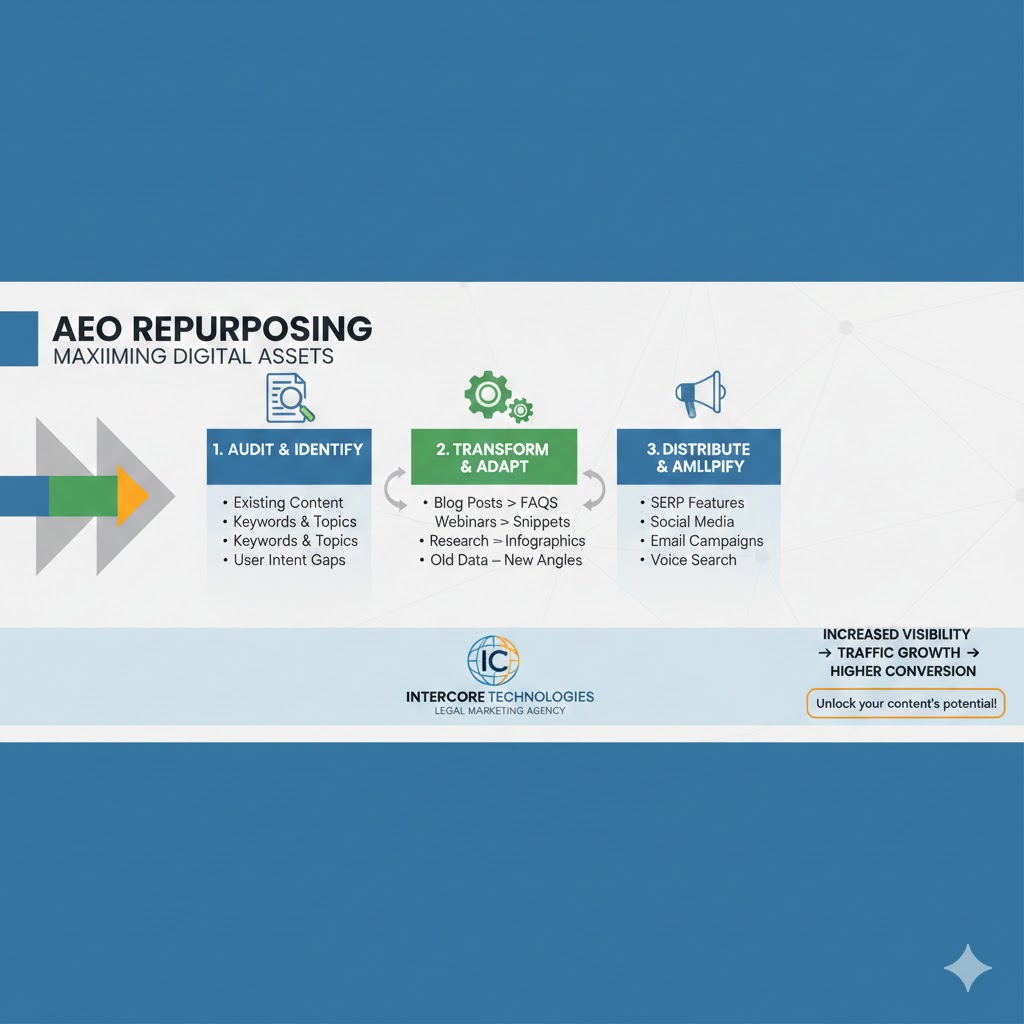
Tracking & Measurement
Measuring AEO success requires different metrics than traditional SEO. AI platform citations aren’t tracked in Google Analytics, so you need specialized monitoring approaches.
Key Performance Indicators (KPIs)
| Metric | Measurement Method | Target (90 Days) |
|---|---|---|
| AI Platform Citations | Manual testing (10 practice area queries/week) | 15-25 citations across platforms |
| Brand Mentions | Brand24, Mention, Google Alerts | 30-50 new mentions/month |
| Authoritative Backlinks | Ahrefs, SEMrush domain authority tracking | 8-12 DA 50+ backlinks |
| Video Performance | YouTube Analytics, TikTok Analytics | 500-1,000 total views |
| LinkedIn Engagement | LinkedIn Analytics (likes, comments, shares) | 50+ engagements per post |
| Forum Participation | Reddit/Quora analytics, upvotes, follows | 15-20 answer upvotes |
Essential Tracking Tools
Brand Monitoring: Brand24 or Mention for tracking brand mentions across social media, forums, blogs, and news sites. Set up alerts for firm name, attorneys’ names, and practice-specific terms.
Backlink Analysis: Ahrefs or SEMrush to track new referring domains, particularly from high-authority publications and .edu/.gov sources. Monitor domain authority increases as quality backlinks accumulate.
Social Analytics: Native platform analytics (YouTube Studio, LinkedIn Analytics, TikTok Analytics) to track engagement rates, shares, and comment quality. These indicate content resonance and citation potential.
AI Citation Testing: Manual testing remains most reliable. Create a test query list (10-15 variations of “[practice area] lawyer in [city]”) and check weekly which AI platforms cite your firm. Use our ROI calculator to track lead generation improvements correlated with citation increases.
Common Mistakes to Avoid
❌ Critical Mistakes That Kill AEO Effectiveness:
1. Automated Cross-Posting – Publishing identical content across all platforms signals spam to AI systems. Each platform requires native formatting and platform-specific optimization.
2. Link Dropping Without Value – Posting “Check out my article” with a URL on forums gets flagged as spam. Provide genuine answers first, then reference your content as supplementary reading.
3. Ignoring Transcripts – Publishing video and audio without accurate transcripts means AI platforms can’t process your content. Always include complete transcripts with proper schema markup.
4. Generic Guest Post Pitches – Mass email templates to publications get ignored. Personalized pitches with unique data or insights have 10x higher acceptance rates.
5. Neglecting Platform-Specific Requirements – Each AI platform has unique crawling preferences. One-size-fits-all approaches significantly reduce citation potential.
Advanced Strategies for Law Firms
Once you’ve mastered the basic AEO Repurposing Map, these advanced techniques can amplify results for personal injury, criminal defense, and other competitive practice areas:
Co-Citation Building
Create content where your firm name appears alongside recognized authorities in your practice area. Guest post on ABA publications, contribute to legal encyclopedias, or provide expert commentary for news outlets covering legal topics. AI platforms use co-citation patterns to determine topical expertise.
Semantic Content Clusters
Instead of repurposing individual blog posts, create interconnected content clusters where all 8 signal types link back to a central hub page. For example, a comprehensive guide on “California Personal Injury Law” supported by 10+ blog posts, each repurposed through all 8 channels, creates exponentially stronger topical authority signals.
AI Platform Testing Protocols
Develop systematic testing protocols where you query each AI platform weekly with variations of your target searches. Document which content formats generate citations most frequently, then double down on those signals. Different practice areas show different optimal signal mixes—estate planning may favor LinkedIn and audio content, while personal injury may prioritize video and forum discussions.
Frequently Asked Questions
How long does it take to see results from AEO repurposing?
Most law firms begin seeing measurable AI platform citations within 60-90 days of consistent implementation. Initial results typically appear as brand mentions in AI-generated responses, followed by direct firm citations around the 90-day mark. Full ROI—measured by lead generation improvements—usually becomes evident at 120-150 days. The timeline depends on practice area competitiveness, with personal injury and family law showing faster results than highly specialized niches.
Can I implement this strategy in-house or do I need an agency?
Solo practitioners and small firms can implement AEO repurposing in-house, but it requires 8-12 hours per blog post to execute all eight signal types effectively. The learning curve for platform-specific optimization, schema implementation, and citation outreach adds another 20-30 hours initially. Most firms find that outsourcing to specialists like InterCore provides better ROI, as our AI-powered automation reduces per-post time to 2-3 hours while maintaining quality across all channels. The decision depends on your internal resources and opportunity cost of attorney/staff time.
Which signal types provide the fastest ROI?
Video content (YouTube Shorts, TikTok) and LinkedIn thought leadership typically generate the fastest initial traction, often within 2-4 weeks. These platforms have built-in discovery algorithms that surface quality content to relevant audiences. Citation outreach to authoritative publications provides the highest long-term ROI but takes 30-60 days for publication and another 30-60 days before AI platforms begin citing those sources. For immediate results, prioritize video and LinkedIn; for sustained authority, focus on citation outreach and entity linking.
Do all 8 signals need to be implemented for every blog post?
No, but implementing 6-7 of the 8 signals yields optimal results. You can selectively omit signals based on your target audience and practice area. For example, B2B-focused practices (business law, employment law) might skip TikTok but double down on LinkedIn and citation outreach. Consumer-focused practices (personal injury, family law) benefit from all social video platforms but may deprioritize academic entity linking. The key is consistency—better to fully execute 6 signals per post than poorly implement all 8.
How do I track AI platform citations without expensive tools?
Manual testing remains the most reliable method and requires no special tools. Create a spreadsheet with 10-15 variations of your target queries (“[practice area] lawyer in [city]”, “best [practice area] attorney near me”, etc.). Query each AI platform (ChatGPT, Gemini, Claude, Perplexity) weekly and document whether your firm appears in responses. Track positioning (first mention vs. third mention), context (recommended vs. mentioned), and specific content cited. This 30-minute weekly process provides clear trend data. For brand mention tracking across the web, free tools like Google Alerts and Talkwalker Alerts cover 70% of what expensive platforms provide.
What’s the relationship between AEO and traditional SEO?
AEO complements rather than replaces traditional SEO. Your foundational SEO optimization—technical site health, keyword targeting, local citations—remains essential because it helps AI platforms discover your content initially. AEO extends that foundation by creating distributed signals across platforms where AI systems gather information. Think of SEO as your home base and AEO as your outposts—both necessary for comprehensive visibility in 2025’s search landscape where 60% of legal queries happen on AI platforms.
How many blog posts per month should I be repurposing?
Quality over quantity. Two blog posts per month, fully repurposed through all 8 signal types, outperforms eight blog posts with minimal distribution. Each blog post requires 8-12 hours for comprehensive repurposing, so realistic expectations for in-house implementation are 2-3 posts monthly. Agencies using automated workflows can handle 4-6 posts monthly per client. The sweet spot for most law firms is 2-4 thoroughly repurposed posts per month, creating 16-32 distinct content pieces across all platforms—enough volume for sustained visibility without overwhelming your audience.
Ready to Implement the AEO Repurposing Map?
Our AI-powered content multiplication system handles all 8 signal types for you, transforming your blog content into comprehensive AI platform visibility.
InterCore Technologies LLC | 13428 Maxella Ave, Marina Del Rey, CA 90292 | sales@intercore.net
Conclusion: The Future of Legal Marketing is Multi-Platform
The AEO Repurposing Map represents a fundamental shift in how law firms approach content marketing in the AI era. Traditional single-publication strategies—write a blog post, optimize for Google, hope for traffic—no longer capture the majority of potential clients researching legal services. With 60% of legal searches now occurring on AI platforms, comprehensive distribution across all eight signal types has become essential rather than optional.
Law firms that adopt this framework early gain compounding advantages. Each piece of repurposed content creates citation opportunities that persist for months or years across multiple platforms. As AI systems continue learning from the web, your distributed content becomes increasingly valuable—forum discussions remain searchable indefinitely, videos accumulate views, publications maintain authority, and entity connections strengthen over time.
The complexity of executing all eight signal types effectively explains why specialized GEO services deliver superior ROI for most firms. The alternative—learning platform-specific optimization, building outreach relationships, mastering schema implementation, creating multimedia content—represents hundreds of hours of trial and error. Our two decades of legal marketing experience and AI-powered automation systems compress that timeline while avoiding costly mistakes.
Whether you choose to implement this framework in-house or partner with specialists, the critical step is beginning immediately. AI platform algorithms favor established authority signals, meaning the firms that start building comprehensive multi-platform presence today will dominate AI recommendations for years to come. The question isn’t whether to adopt AEO repurposing—it’s how quickly you can scale it across your entire content library.
About the Author
Scott Wiseman is CEO and Founder of InterCore Technologies LLC, a Marina Del Rey-based legal marketing agency specializing in AI-powered marketing solutions since 2002. With over 20 years of experience optimizing content for evolving search technologies, Scott pioneered many of the Generative Engine Optimization (GEO) strategies law firms now use to achieve visibility across ChatGPT, Google Gemini, Claude, and Perplexity. InterCore’s clients have achieved documented 340% increases in AI platform citations and 18:1 to 21:1 marketing ROI through systematic AEO implementation.