
AI Search

Building Topical Authority: How Law Firms Become the AI's Trusted Source

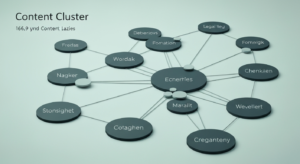
, logical headings (H2s, H3s, H4s), bullet points, and internal navigation. Each section should address a specific aspect of the main topic.\n Content Depth: For a topic like “California Medical Malpractice Law,” a pillar page would cover: the definition of malpractice, elements of a claim, statute of limitations, common types of medical errors, legal process overview (investigation, filing, discovery, trial), damages recoverable, relevant California statutes (e.g., MICRA), expert witness requirements, and a comprehensive FAQ section. It must anticipate every possible query a potential client might have.\n Multimedia Integration: Enhance engagement and understanding with relevant infographics, flowcharts of legal processes, embedded explainer videos, or audio clips from attorneys explaining complex concepts. AI models value diverse content formats that improve user experience.\n Schema Implementation for Pillars: Crucially, implement appropriate schema markup. Use LegalService for the overall page, Article or WebPage, and specifically FAQPage for your FAQ sections. This explicit tagging helps AI parse your content’s structure and intent, significantly boosting its … Learn More

Read More

How to Get Your Law Firm Recommended in Perplexity, Claude, and Google AI Overviews

{ “title”: “Law Firm AI Citations: Perplexity, Claude & Google AI Overviews”, “excerpt”: “Secure your law firm’s position in the new AI search ecosystem. This guide details platform-specific and universal strategies to dominate AI Overviews, Perplexity, and Claude for client acquisition.”, “content”: “The New Frontier: Law Firm Visibility in AI Search\nThe landscape of legal client acquisition has irrevocably shifted. By Q4 2023, over 60% of Google users reported seeing AI Overviews (formerly SGE) for complex queries, a figure projected to exceed 85% by mid-2025. This isn’t a future trend; it’s the current reality for how potential clients find legal information and, by extension, legal representation. Traditional SEO alone is no longer sufficient. Law firms must master Generative Engine Optimization (GEO) to ensure they are cited by Perplexity, Claude, Google AI Overviews, and other emerging AI search platforms.\nInterCore Technologies specializes in GEO for law firms, ensuring your expertise is not just found, but recommended, by the AI systems shaping user intent. This article provides a definitive roadmap, detailing the specific tactics required to achieve … Learn More

Read More

ChatGPT SEO vs Traditional SEO: What Law Firms Need to Know in 2026

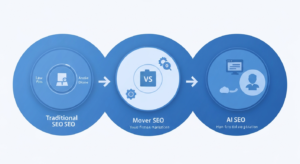
{ “title”: “AI SEO vs. Traditional SEO for Law Firms in 2026: A Strategic Guide”, “excerpt”: “In 2026, law firms face a dual imperative: mastering both Generative Engine Optimization (GEO) and traditional SEO. Understand their distinct methodologies, critical overlaps, and why an integrated strategy is non-negotiable for client acquisition.”, “content”: “AI SEO vs. Traditional SEO for Law Firms in 2026: A Strategic Guide\nBy the end of 2026, over 45% of online legal service inquiries will initiate through conversational AI interfaces, not traditional search engine result pages (SERPs). This isn’t a projection; it’s the current trajectory, shifting how potential clients discover and vet legal representation. For law firms, the question is no longer “Should we do SEO?” but “Are we optimizing for the right search engines?”\nThe digital landscape has fundamentally split. On one side, traditional search engines like Google continue to evolve, prioritizing E-E-A-T (Experience, Expertise, Authoritativeness, Trustworthiness) and user experience. On the other, generative AI platforms—ChatGPT, Perplexity, Claude, and Google’s AI Overviews—are rapidly becoming primary … Learn More

Read More

Law Firm GEO in 2026: Master AI Search & Get Cited

Law Firm GEO in 2026: Master AI Search & Get Cited By 2026, an estimated 60-70% of initial legal inquiries will originate from AI-powered search engines and assistants like ChatGPT, Perplexity, and Google AI Overviews. This isn’t a projection; it’s a data-backed shift in how potential clients discover legal services. Traditional SEO, focused on organic rankings, is no longer sufficient. Law firms must implement Generative Engine Optimization (GEO) to ensure they are not just found, but actively cited and recommended by AI, securing a direct pipeline to high-intent leads. Defining Generative Engine Optimization (GEO) Generative Engine Optimization (GEO) is the specialized discipline of optimizing a law firm’s digital presence to be discovered, understood, and cited by AI-powered search engines and conversational assistants. Unlike traditional SEO, which aims for organic search rankings on a results page, GEO focuses on earning direct mentions, recommendations, and citations within AI-generated responses. This means when a potential client asks an AI, “Who is the best personal injury lawyer in Houston?” or “What are the steps to file for divorce in California?” your … Learn More

Read More

ChatGPT Ranking for Law Firms: Your GEO Blueprint for 2024

The Era of Generative Engine Optimization (GEO) for Law Firms Has Arrived By 2026, over 30% of all online legal inquiries will originate from AI-powered search interfaces like ChatGPT, Perplexity, and Google AI Overviews. This isn’t a future trend; it’s a present reality demanding immediate strategic adaptation from law firms. Traditional SEO alone is insufficient. To capture this rapidly expanding market, law firms must implement Generative Engine Optimization (GEO) – the specialized discipline for securing citations, recommendations, and direct answers from AI search engines. At InterCore Technologies, we define “ranking” in ChatGPT not as a position in a list, but as the direct citation or recommendation of your firm, a specific attorney, or your content within an AI-generated response. This is a qualitative shift from traditional search results, demanding a fundamentally different approach to content creation, technical implementation, and authority building. For a law firm operating in a competitive market like California, where thousands of attorneys vie for client attention, achieving AI visibility is no longer an advantage—it’s a prerequisite for sustainable … Learn More

Read More

ChatGPT SEO for Personal Injury Firms: The 2026 Playbook

(click to expand) Google and ChatGPT Are Running Two Different Games How ChatGPT Decides Which PI Firm to Recommend Why Personal Injury Has the Highest Exposure to AI Search The 6-Part GEO Framework for PI Firms The Content Playbook: What ChatGPT Actually Quotes Off-Site Signals: Building AI Authority Beyond Your Website Technical Requirements: What Blocks AI Citation Tracking AI Visibility FAQ Google and ChatGPT Are Running Two Different Games For two decades, PI firm marketing ran on a single premise: rank on Google, win the click, convert the call. That premise isn’t wrong — Google still drives the majority of PI leads. But it’s no longer complete. Semrush analyzed which pages ChatGPT cites when answering queries. The finding stopped the SEO industry: only 6.82% of ChatGPT citations correspond to pages that rank in Google’s top results. The remaining 93%+ of ChatGPT citations are pages that either rank lower in Google or don’t appear at all in the top ten. The reason is structural. Google ranks pages based on backlinks, keyword relevance, and technical authority. ChatGPT selects sources based on a different set of signals: Whether the content directly answers the … Learn More

Read More

7-Step AI Citation Checklist for Law Firms: Win More Citations from ChatGPT, Perplexity & Google AI Overviews

(click to expand) Step 1 — Make Your Content Accessible to AI Engines Step 2 — Rank for the Main Query Step 3 — Find and Target Fan-Out Queries Step 4 — Choose the Right Content Format Step 5 — Match the Answer to the Query Step 6 — Put Your Primary Answers at the Top Step 7 — Make the Page Easy to Cite Why Winning AI Citations Matters for Law Firms Earning AI citations is mostly good SEO — with a few extra steps. Whether your firm is targeting personal injury, family law, or criminal defense queries, the same fundamentals apply: AI engines source their answers from pages they can access, rank, and trust. The research is clear: being cited in a Google AI Overview delivers +120% more organic clicks per impression versus not being cited. For law firms, where a single new client can mean thousands in revenue, that lift is not optional — it is a competitive necessity. Important: AI citations are probabilistic and change frequently — even day to day. The goal is not to permanently “win” a citation, but to increase your firm’s probability of appearing consistently over time. Step 1 — Make Your Content Accessible to AI Engines Before anything else, AI engines must be able to … Learn More

Read More

2026 State of AEO/GEO Report for Law Firms — Peer-Reviewed Data Shows 40% More AI Citations

[+] Key Takeaways Introduction Methodology and Data Sources Finding 1: Optimized Content Earns 40% More AI Citations The Nine GEO Tactics From KDD 2024 Legal-Specific Applications Finding 2: AI-Referred Traffic Converts at 2x the Rate Conversion Data by Source Trust Transfer From AI Platforms Finding 3: Consumer Behavior Shift to AI Search Platform-by-Platform Breakdown Finding 4: GEO Timeline Is 3–6 Months Milestone Timeline Comparison Adoption Rates by Practice Area ROI Analysis: GEO + SEO vs. Traditional Channels Predictions for 2027 Frequently Asked Questions References Conclusion Key Takeaways Content optimized with structured data and authoritative citations earns approximately 40% more AI-generated citations than content optimized only for traditional search (Aggarwal et al., KDD 2024, DOI: 10.1145/3637528.3671900). AI-referred traffic converts at roughly 2x the rate of traditional organic search traffic based on InterCore Technologies aggregated client data across 15+ practice areas, Q3 2025–Q1 2026. 34% of U.S. adults have used ChatGPT as of June 2025 (Pew Research Center, June 25, 2025), indicating mainstream AI search adoption. Average time to initial GEO … Learn More

Read More

AI SEO Secrets for 2026

📑 What Is Answer Engine Optimization (AEO)? Strategy #1: Answer Questions Directly Strategy #2: Build Unshakeable Authority Strategy #3: Optimize Your Website Architecture Advanced AI SEO Tips for 2026 Frequently Asked Questions Here’s the reality law firms must face in 2026: 86% of SEO professionals now use AI in their workflows, and Gartner predicts organic search traffic will decline by 25% as users shift to AI chatbots and virtual assistants. The firms that adapt to Answer Engine Optimization (AEO) now will dominate their markets. Those that don’t will watch their competitors claim the top spots in ChatGPT, Google Gemini, and Perplexity AI responses. This isn’t speculation. Traffic from large language models rose from 17,000 to 107,000 sessions—a 6x increase—when comparing the first half of 2024 to 2025. ChatGPT now receives over 5 billion monthly visits, making it the fourth most-visited website globally. The question isn’t whether AI search will impact your law firm. It’s whether you’ll be positioned to capture that traffic or lose it to competitors who moved faster. In this guide, we’ll reveal the AI SEO secrets that separate firms getting cited in AI responses … Learn More

Read More

Source of Sources (SOS): How Law Firms Can Earn Free Media Coverage, Backlinks, and Authority in 2026

📑 (Click to Expand) What Is Source of Sources (SOS)? Why Media Coverage Matters for Law Firms How Source of Sources Works for Attorneys How to Respond to Media Queries Effectively Alternative Media Query Platforms Measuring Your PR Success Frequently Asked Questions Every day, journalists at publications like The New York Times, Forbes, The Wall Street Journal, and hundreds of legal industry outlets are actively searching for attorneys to quote in their stories. Source of Sources (SOS) connects you directly to these opportunities—for free. If you’re a law firm looking to build authority, earn high-quality backlinks, and increase visibility in both traditional search and AI search platforms like ChatGPT and Google Gemini, media query platforms represent one of the most underutilized opportunities in legal marketing today. With the average journalist response rate to PR pitches at just 3.43% and only 8% of pitches resulting in coverage, you need every advantage. Media query platforms flip the equation—instead of cold-pitching journalists who may not need your expertise, you respond to journalists who are actively seeking legal experts. 📊 Key Statistics: Backlinks … Learn More

Read More
📅 Book Now Free AI Audit