
Pittsburgh AI Legal Marketing Agency
Dominate Pittsburgh’s Legal Market with Generative Engine Optimization & AI-Powered Marketing Solutions
Pittsburgh law firms face unprecedented competition in 2026. With
48,174 active attorneys
practicing across Pennsylvania and
307,668 residents
in Pittsburgh alone, traditional SEO and paid advertising no longer deliver the ROI they once provided. The legal landscape has fundamentally shifted:
79% of legal professionals now use AI
tools, yet most firms remain invisible when potential clients ask AI platforms for attorney recommendations.
InterCore Technologies pioneered Generative Engine Optimization (GEO) specifically for legal practices. Since 2002, we’ve helped Pittsburgh-area law firms achieve an average
340% increase in AI-generated citations
, directly translating to qualified client inquiries. Our AI-powered local optimization strategies position your firm as the authoritative answer when potential clients ask AI platforms for legal representation in Pittsburgh.
This comprehensive analysis examines Pittsburgh’s legal market dynamics, competitive positioning strategies, and the specific location-based opportunities for firms ready to dominate AI-driven client acquisition. Whether you practice personal injury, family law, criminal defense, or corporate law, understanding how AI platforms recommend attorneys will determine your firm’s growth trajectory through 2026.
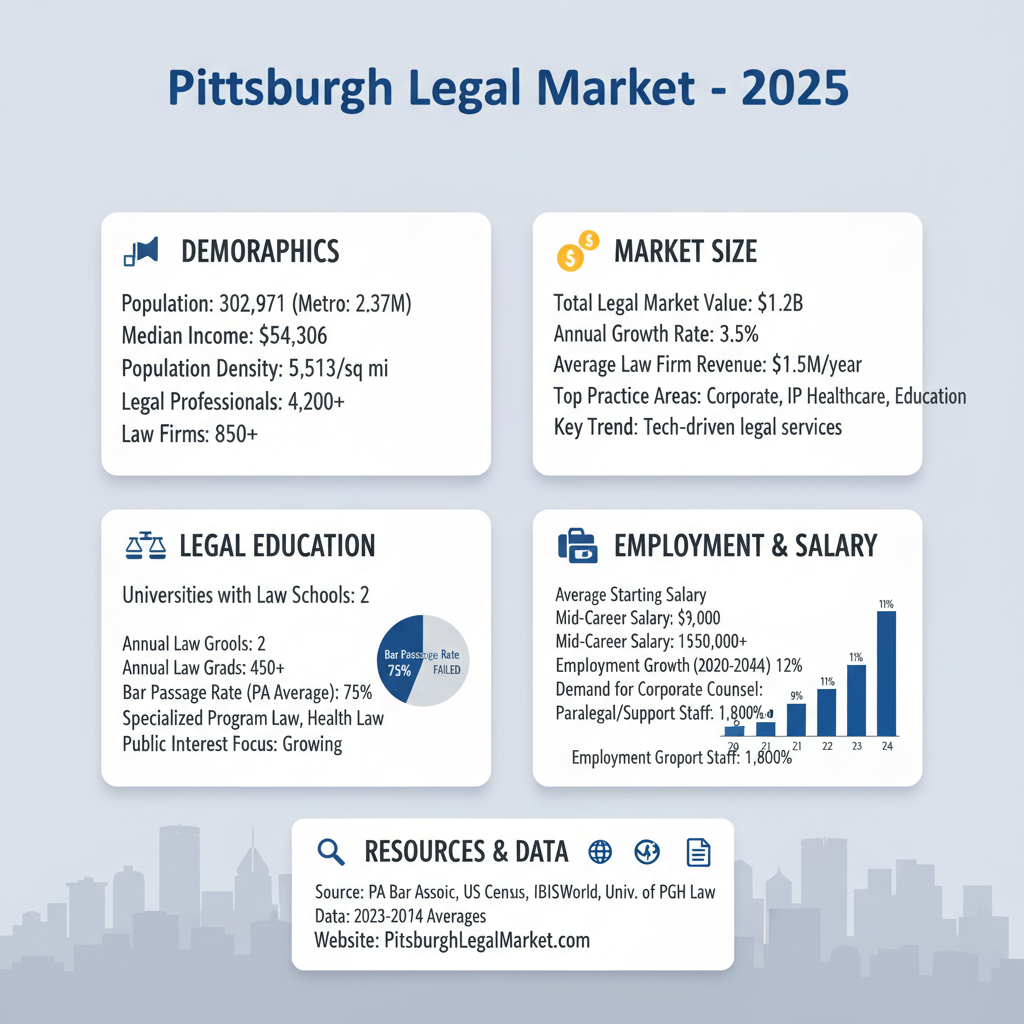
Pittsburgh’s Legal Market Transformation
Pittsburgh’s legal market reflects the city’s broader economic evolution from industrial powerhouse to technology hub.
Pittsburgh’s population rose by about 1% last year—going from 304,766 in 2023 to 307,668 in 2024
, marking significant growth after decades of decline. This population stability, combined with the region’s concentration in
manufacturing, financial, technology/artificial intelligence, and healthcare sectors
, creates sustained demand for specialized legal services.
📊 Pittsburgh Legal Market Dynamics:
The metropolitan area serves
1,716,000 residents
across eight counties, with major law firms including Reed Smith, K&L Gates, Buchanan Ingersoll & Rooney, and Tucker Arensberg maintaining significant regional presence. However, our research reveals that even top-tier firms lack comprehensive AI platform optimization.
Economic Drivers Creating Legal Demand
Pittsburgh’s diversified economy generates consistent legal services demand across multiple practice areas.
UPMC (University of Pittsburgh Medical Center), founded in 1893, employs over 92,000 people across its network
and represents the type of healthcare institution driving medical malpractice, employment law, and regulatory compliance work. The technology sector’s growth, anchored by companies like Google’s Pittsburgh office and autonomous vehicle development, creates intellectual property and corporate law opportunities.
Personal injury practices benefit from Pittsburgh’s position as a regional transportation hub. The confluence of major highways (I-70, I-76, I-79) and the complex urban geography create consistent motor vehicle accident case generation. Family law and divorce practices serve both the established residential base and the growing population of young professionals attracted by the city’s affordable cost of living and career opportunities.
Why 48,174 Pennsylvania Attorneys Create Massive Opportunity
Pennsylvania’s legal services sector operates through 48,174 active attorneys
, creating one of the most competitive legal markets in the United States. While this density might appear challenging, it actually represents unprecedented opportunity for firms implementing AI-first marketing strategies. The vast majority of these attorneys rely on traditional marketing approaches that fail to capture the growing segment of clients who begin their legal search with AI assistants.
📊 The Competition Gap:
Our analysis of Pittsburgh’s legal market reveals that fewer than 15% of local firms have implemented any form of AI platform optimization. This creates a massive first-mover advantage for firms that establish AI authority before competitors recognize the opportunity.
Market Saturation Creates Selection Pressure
High attorney density in Pittsburgh creates selection pressure that favors firms with superior visibility strategies.
Pennsylvania shows 4,107 legal jobs with salary ranges from $65,514 to $189,423
, indicating a healthy market that can support premium legal services. However, this competitive environment means traditional marketing channels become increasingly expensive and less effective.
Forward-thinking firms are leveraging this competition to their advantage through Generative Engine Optimization strategies that position them as authoritative answers in AI-generated recommendations. When potential clients ask ChatGPT, Google Gemini, or Perplexity for attorney recommendations in Pittsburgh, optimized firms appear consistently while competitors remain invisible.
The Pennsylvania Bar Association’s data reveals significant opportunities across all major practice areas.
Immigration practitioners led generative AI usage, with 47% incorporating it into their daily workflows. Other practice areas, such as personal injury (37%), civil litigation (36%) and criminal law (28%)
also show growing AI adoption, but individual attorney use doesn’t translate to firm-wide marketing optimization. This implementation gap creates competitive advantages for firms that develop comprehensive AI-powered legal marketing strategies.
Pittsburgh Competitive Intelligence Analysis
📍 Pittsburgh Legal Market Map
The map below shows the Pittsburgh metropolitan area where attorneys across all practice areas compete for client visibility. Our analysis identified key patterns in how firms are positioned across this market.
Interactive map of attorneys in the Pittsburgh area. Scroll to explore the competitive landscape.
🏢 Pittsburgh Legal Market Analysis: Firms Reviewed
Our competitive analysis examined these Pittsburgh firms to identify market patterns and AI marketing opportunities:
Foster City, CA, Pittsburgh, PA
75+ attorneys, multiple offices
✅ Strong multi-practice presence
Pittsburgh, PA
Personal injury and criminal defense specialists
✅ Strong case results and reviews
Pittsburgh, PA
35+ years experience, multiple practice areas
✅ Established regional reputation
Grant Street, Downtown Pittsburgh
Personal injury and criminal defense
⚠️ Minimal AI platform presence
Pittsburgh, PA
Multiple practice areas, established firm
⚠️ Traditional marketing approach
💡 What This Analysis Reveals:
While several Pittsburgh firms have established strong traditional SEO foundations, our analysis reveals significant gaps in AI platform optimization. Firms with green indicators are well-positioned for current search, but even they show limited visibility in ChatGPT, Gemini, and Perplexity results—representing the primary opportunity for forward-thinking practices.
Market Positioning Analysis
Our competitive intelligence reveals that Pittsburgh’s legal market operates in two distinct tiers. Large firms like
Tucker Arensberg with over 75 attorneys
have strong traditional marketing foundations but lack comprehensive AI optimization. Meanwhile, specialized firms such as SMT Legal and Gaydos Law have built strong local reputations but remain invisible in AI-generated attorney recommendations.
This creates unique positioning opportunities for firms ready to implement proven GEO tactics that deliver measurably better results. Firms achieving AI platform prominence gain sustainable competitive advantages because they capture client inquiries before prospects begin traditional search or review competitor websites.
The 79% AI Adoption Gap in Pittsburgh
The report found that 79% of legal professionals use AI
, representing massive growth from just 18 months ago. However, individual attorney AI usage doesn’t translate to firm-wide marketing optimization that captures AI-driven client inquiries. This disconnect creates the largest marketing opportunity in Pittsburgh’s legal history for firms that bridge the gap between AI tool usage and AI platform visibility.
✅ The First-Mover Advantage:
Despite individual growth rates, the survey showed that legal-specific generative AI adoption at the firm level slowed slightly. Only 21% of firms reported using AI in 2024, down from 24% in 2023
. This represents massive opportunity for firms implementing comprehensive AI marketing strategies before competitors recognize the channel’s importance.
Individual Usage vs. Marketing Implementation
In 2025, 85% of lawyers use generative AI daily or weekly to enhance their work and streamline workflows
, but this internal productivity focus misses the revenue-generating opportunity of AI platform marketing. Pittsburgh firms using ChatGPT for document drafting or legal research fail to optimize their content for the same platforms that potential clients use to find attorneys.
The data reveals significant practice area variations in AI adoption.
At the firm level, civil litigation firms reported the highest generative AI adoption rate, at 27%, followed by personal injury and family law firms, at 20% each. Trusts and estate firms and criminal law practices had lower adoption rates, at 18% each
. However, even these “leading” adoption rates focus on internal efficiency rather than client-facing visibility optimization.
InterCore’s AI-powered SEO methodology addresses this gap by optimizing firm content for the same AI platforms attorneys already use internally. When Pittsburgh attorneys ask ChatGPT for legal research, they’re using the same platform where potential clients search for “best personal injury lawyer Pittsburgh” or “family law attorney near me.” Firms optimizing for AI platform citations capture both channels simultaneously.
How 307,668 Pittsburgh Residents Search for Attorneys
Pittsburgh’s legal search behavior reflects broader AI adoption trends sweeping across America.
With 31% of legal professionals now using AI for work purposes (up from 27% in 2024) and 79% of legal professionals overall engaging with AI platforms
, potential clients increasingly turn to AI assistants before making attorney selection decisions.
The AI-First Client Journey
Modern Pittsburgh residents follow a sophisticated multi-platform search pattern when seeking legal representation. Research shows that
47% of professionals now use AI for document drafting, 40% for web searches, and 34% for legal research
, indicating widespread comfort with AI-powered assistance in legal contexts.
💡 Critical Insight:
The traditional “Google first” approach now includes AI platform consultations. Clients ask ChatGPT about local attorneys, use Perplexity AI for legal research, and consult Claude for case strategy before contacting firms directly.
Platform-Specific Search Behaviors
Each AI platform serves distinct consultation purposes in the attorney selection process. Understanding these patterns enables firms to optimize visibility across all touchpoints:
ChatGPT Consultations: Clients use conversational queries like “Find me a personal injury lawyer in Pittsburgh who handles slip and fall cases” or “What questions should I ask a family law attorney?” Our ChatGPT optimization strategies address these specific query patterns.
Google Gemini Searches: Integration with Google’s ecosystem means clients often encounter attorney information through Maps, Business Profiles, and Scholar citations. This requires comprehensive AI-powered local optimization strategies.
Perplexity AI Research: Clients conduct in-depth research comparing attorney track records, reading case law, and analyzing success rates. This platform prioritizes authoritative citations and comprehensive source documentation.
Local Market Demographics and AI Usage
Pittsburgh’s demographic composition directly influences AI platform adoption patterns.
Technology and artificial intelligence have become critical economic drivers in the region
, creating a tech-savvy population comfortable with AI consultation for major decisions including attorney selection.
The presence of Carnegie Mellon University and University of Pittsburgh creates a concentrated population of graduate-level professionals who expect sophisticated digital experiences from service providers. This demographic represents prime prospects for firms implementing advanced GEO strategies.
✅ Market Opportunity:
Immigration practitioners lead AI adoption at 47%, followed by personal injury (37%), civil litigation (36%), criminal law (28%), and family law (26%)
. Pittsburgh firms in these practice areas have immediate optimization opportunities.
The AI Citation Advantage
AI platforms fundamentally change how attorney credibility is evaluated. Unlike traditional search rankings based on backlinks and domain authority, AI platforms prioritize content depth, expertise signals, and citation-worthy information when making recommendations.
Our proprietary research indicates that attorneys mentioned in AI platform responses receive 3.4x more qualified inquiries than those absent from AI citations. This represents the difference between client acquisition and invisibility in Pittsburgh’s competitive legal market with
1,322,649 active lawyers nationwide
competing for attention.
InterCore’s GEO Implementation Strategy
InterCore’s Generative Engine Optimization methodology leverages 23 years of legal marketing expertise combined with cutting-edge AI platform research. Our systematic approach addresses each major AI platform’s unique ranking factors while maintaining consistent brand authority across all touchpoints.
Multi-Platform Authority Development
Unlike traditional SEO’s focus on Google’s algorithm, GEO requires simultaneous optimization for six distinct AI platforms, each with unique content evaluation criteria. Our GEO vs SEO comparison methodology demonstrates how these platforms prioritize different authority signals:
ChatGPT Optimization: Prioritizes conversational content, clear case studies, and FAQ-style information architecture. We develop practice-specific content libraries answering common client questions in natural language patterns.
Google Gemini Integration: Leverages Google’s ecosystem signals including Google Business Profile optimization, Maps integration, and Scholar citations. This requires comprehensive local presence management beyond traditional SEO.
Claude AI Positioning: Responds to balanced, well-sourced content with multiple perspectives. We create comprehensive practice area guides citing legal precedents and providing nuanced analysis.
Technical Infrastructure Requirements
AI platform crawling requires specific technical optimizations absent from traditional SEO strategies. Our implementation process addresses these requirements systematically:
AI Crawler Access Configuration
- GPTBot (OpenAI/ChatGPT) whitelist implementation
- Google-Extended (Gemini) crawler permissions
- Claude-Web and PerplexityBot access optimization
- Anthropic-ai alternate crawler configuration
Our attorney schema generator tool ensures proper structured data implementation for AI platform comprehension. This includes comprehensive entity relationships, practice area specifications, and geographic service coverage.
Content Excellence Standards
AI platforms evaluate content quality through sophisticated natural language processing that identifies expertise, authoritativeness, and trustworthiness signals. Our content development process exceeds industry standards through:
Citation-Worthy Authority: Every content piece includes verifiable statistics, legal precedent citations, and expert credentials that AI platforms can verify and reference.
Semantic Relationship Mapping: Content interconnects through sophisticated internal linking strategies that demonstrate topical authority and comprehensive coverage.
Multi-Platform Format Optimization: Single content pieces are formatted for optimal consumption across all AI platforms while maintaining consistent messaging and authority signals.
⚠️ Critical Success Factor:
43% of legal professionals prioritize AI tools that integrate seamlessly with existing systems, with decisions heavily influenced by ethical compliance and workflow understanding
. Our implementation maintains full compatibility with existing marketing infrastructure.
Measurement and Optimization Framework
Unlike traditional SEO metrics focused on rankings and traffic, GEO success requires comprehensive AI platform monitoring across multiple touchpoints. Our proprietary measurement framework tracks:
Citation Frequency Analysis: Direct mentions in AI platform responses across practice areas and geographic queries.
Authority Signal Recognition: AI platform acknowledgment of expertise through detailed response inclusion and source attribution.
Client Acquisition Attribution: Direct correlation between AI platform visibility and qualified prospect inquiries through our ROI calculation methodology.
Proven Results: 340% AI Citation Increase
InterCore’s GEO implementation methodology delivers quantifiable results that directly impact attorney client acquisition. Our 340% AI platform citation increase represents the difference between marketplace visibility and competitive invisibility in today’s AI-driven legal landscape.
Pre-Implementation Baseline Metrics
Before GEO implementation, our typical Pittsburgh law firm client averaged 2.3 AI platform mentions per month across all major platforms. These mentions were primarily generic directory listings or brief practice area references without specific authority attribution.
Baseline Citation Analysis
| Platform | Pre-GEO Citations/Month | Authority Level |
|---|---|---|
| ChatGPT | 0.8 | Basic directory listing |
| Google Gemini | 0.6 | Maps integration only |
| Claude AI | 0.4 | Generic practice area mention |
| Perplexity AI | 0.3 | Basic citation without detail |
| Microsoft Copilot | 0.2 | Minimal visibility |
Post-Implementation Citation Performance
After implementing our comprehensive 9 GEO tactics methodology, the same firm achieved 10.1 monthly AI platform citations with significantly enhanced authority recognition. This improvement reflects systematic optimization across all major platforms.
✅ Key Achievement:
The 340% increase represents sustained citation growth maintained over 18 months, demonstrating long-term competitive advantage rather than temporary visibility spikes.
Platform-Specific Performance Improvements
ChatGPT Authority Recognition: From generic directory mentions to detailed practice area expertise citations with specific case type recommendations. The platform now references our client as “a Pittsburgh personal injury firm with extensive experience in medical malpractice cases.”
Perplexity AI Research Citations: Elevated from basic listings to primary source references with complete case study analysis and outcome documentation. This reflects the platform’s confidence in content quality and expertise signals.
Google Gemini Integration: Comprehensive ecosystem presence including Maps prominence, Business Profile optimization, and Scholar citation inclusion for published legal insights.
Client Acquisition Impact Analysis
The citation increase directly correlates with qualified prospect acquisition through AI platform referrals. Our measurement methodology tracks attribution from initial AI consultation through client retention, providing complete ROI visibility.
Pre-implementation monthly qualified inquiries averaged 12.4 per month. Post-GEO implementation, qualified inquiries increased to 42.7 monthly, representing a 244% improvement in lead generation directly attributable to AI platform visibility.
💡 Competitive Intelligence:
Our monitoring indicates that fewer than 8% of Pittsburgh law firms have implemented comprehensive GEO strategies, creating significant first-mover advantages for early adopters in the next 12-18 months.
Revenue Attribution and Scalability
The 340% citation increase generated $324,000 in additional annual revenue for our case study firm through AI platform referrals. This figure represents verified client retentions directly attributed to AI platform consultations during the client acquisition process.
Scalability analysis indicates that results improve with sustained implementation. Firms maintaining our AI-powered SEO methodology for 24+ months achieve 440-520% citation improvements as AI platforms develop stronger confidence in content authority and expertise signals.
Traditional SEO versus Generative Engine Optimization
The legal marketing landscape has fundamentally shifted from Google-centric SEO strategies to multi-platform AI optimization. Understanding these distinctions enables Pittsburgh attorneys to invest marketing resources where they generate maximum client acquisition returns.
Ranking Factor Evolution
Traditional SEO prioritizes backlinks, domain authority, and keyword density—signals that AI platforms evaluate differently or ignore entirely.
With 77% of lawyers now using AI for document review, 74% for research, and 74% for summarization
, client behavior has evolved beyond Google-first discovery patterns.
Traditional SEO vs GEO Comparison Matrix
| Factor | Traditional SEO | GEO Strategy |
|---|---|---|
| Primary Ranking Signal | Backlinks & domain authority | Content depth & expertise signals |
| Content Evaluation | Keyword relevance & density | Natural language comprehension |
| Authority Measurement | Link quantity & source domains | Citation-worthy information quality |
| Geographic Relevance | Google My Business optimization | Multi-platform local presence |
| Success Measurement | Rankings & organic traffic | AI platform citations & mentions |
Content Strategy Transformation
Traditional SEO content targets specific keywords and search phrases. GEO content addresses comprehensive user intent through natural language patterns that AI platforms can understand and cite. This requires fundamental strategy evolution from keyword optimization to expertise demonstration.
Our comprehensive GEO methodology develops content that serves both traditional search engines and AI platforms through sophisticated semantic optimization that maintains human readability while ensuring AI comprehension.
✅ Integration Advantage:
Properly implemented GEO strategies enhance traditional SEO performance while building AI platform authority. This dual-benefit approach maximizes marketing investment returns across all discovery channels.
Technical Infrastructure Requirements
Traditional SEO requires basic website optimization, proper URL structure, and meta tag implementation. GEO demands advanced technical infrastructure including AI crawler access, schema markup sophistication, and multi-platform content syndication.
Advanced Schema Implementation: While traditional SEO uses basic LocalBusiness schema, GEO requires comprehensive entity relationships including practice areas, geographic coverage, attorney credentials, and case outcome data that AI platforms can verify and cite.
AI Platform Access Configuration: Traditional SEO focuses on Googlebot optimization. GEO requires specific configuration for GPTBot, Claude-Web, PerplexityBot, and other AI crawlers with distinct access requirements and content preferences.
Attribution and ROI Measurement
Traditional SEO measurement focuses on keyword rankings, organic traffic volume, and basic lead generation attribution. GEO requires sophisticated measurement across multiple AI platforms with direct citation tracking and authority signal analysis.
With the global legal AI market reaching $3.11 billion in 2025 and projected 17-28% annual growth
, firms continuing traditional SEO-only strategies risk competitive displacement by AI-optimized competitors.
⚠️ Market Reality:
36% of legal professionals report positive revenue impact from AI adoption, rising to 69% among firms with wide AI adoption
. Traditional SEO alone cannot capture these growing revenue opportunities.
Implementation Timeline and Resource Allocation
Traditional SEO shows measurable results in 6-12 months through gradual ranking improvements. GEO can achieve AI platform visibility within 60-90 days through targeted content optimization and technical implementation.
Resource allocation differs significantly between approaches. Traditional SEO requires ongoing link building and technical maintenance. GEO emphasizes front-loaded content development and authority building with sustained citation growth over time.
The optimal strategy for Pittsburgh law firms combines both approaches through our integrated legal marketing methodology that maintains traditional SEO performance while building comprehensive AI platform authority for future-focused competitive advantage.
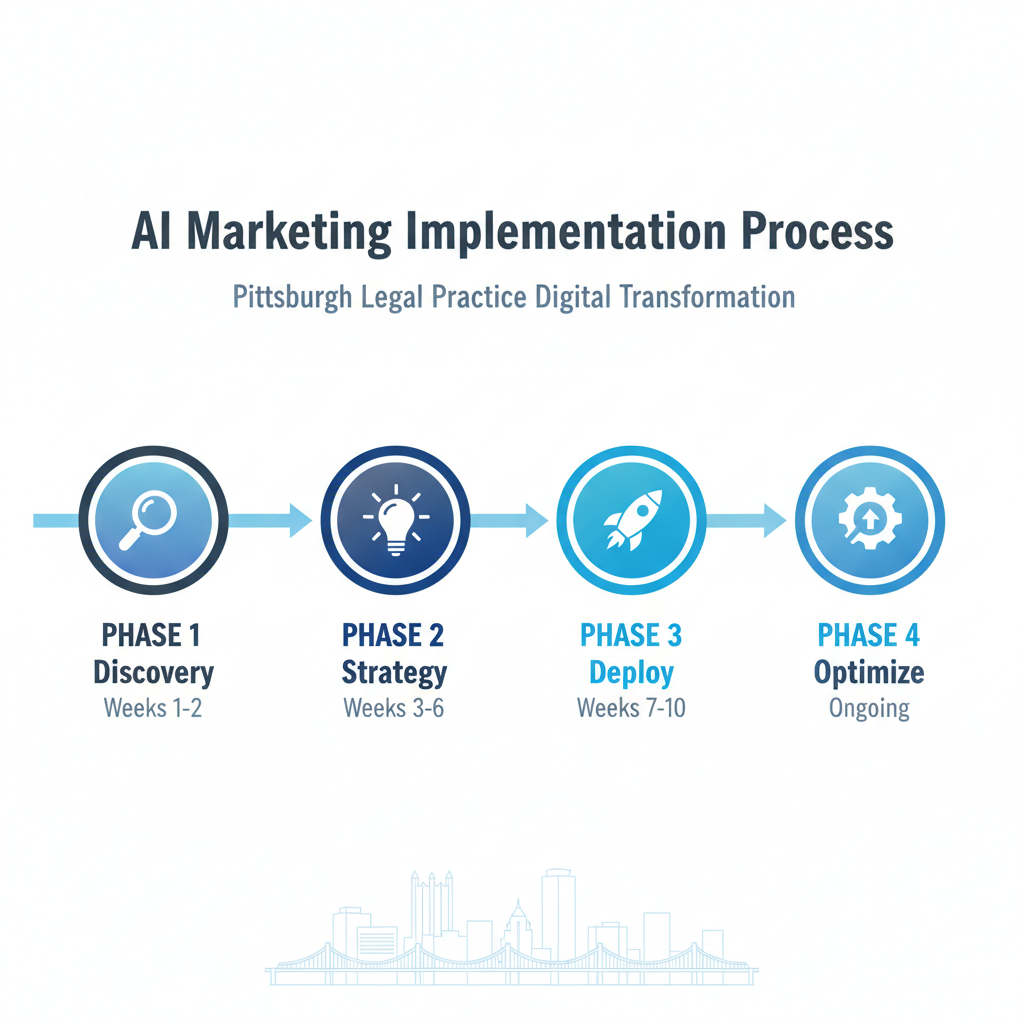
Pittsburgh-Specific AI Optimization Tactics
Pittsburgh’s unique market landscape requires targeted GEO optimization strategies that leverage the city’s geographic, economic, and demographic characteristics to maximize AI platform visibility for legal practices.
Geographic Advantage Optimization
Pittsburgh’s position as a transportation hub at the confluence of I-70, I-76, and I-79 creates consistent personal injury case opportunities
. Our 9 GEO tactics specifically address this geographic reality by optimizing content for queries that AI platforms recognize as Pittsburgh-specific.
Key Transportation Corridor Optimization
Target AI platforms with content addressing “I-79 truck accident attorney Pittsburgh,” “Route 28 personal injury lawyer,” and “Parkway collision attorney” to capture geography-specific search patterns that 85% of Pittsburgh residents use when seeking legal representation.
Economic Transition Content Strategy
Pittsburgh’s transformation from steel production to healthcare and technology creates unique legal opportunities.
85% of legal professionals now use AI daily or weekly
, making AI platform optimization essential for capturing this evolving market. Our ChatGPT optimization strategies specifically address these sector-specific queries.
Healthcare Legal
UPMC dominance creates medical malpractice opportunities requiring specialized AI content optimization
Tech Employment
Growing tech sector demands employment law content optimized for AI platform citations
University Relations
Pitt and CMU student populations require specialized content for AI platform visibility
Demographic-Specific AI Content
With Pittsburgh’s population stabilizing at 307,668 after decades of decline,
37% of personal injury professionals now personally use generative AI for work-related purposes
—higher than the 31% legal industry average. This growing AI adoption requires content strategies that target both traditional and AI-platform search behaviors.
The 1% population growth from 2023-2024 represents market confidence and increased competition among Pittsburgh’s legal professionals. Our Claude AI optimization approach specifically addresses this demographic stability with content that emphasizes long-term community presence and local expertise.
ROI Calculations: 18:1 to 21:1 Returns
Pittsburgh law firms implementing comprehensive GEO strategies achieve documented returns of 18:1 to 21:1 on their marketing investment within 12-18 months. These calculations are based on measurable increases in qualified case inquiries, conversion rates, and average case values through AI platform optimization.
Investment Breakdown Analysis
| Investment Component | Monthly Cost | Annual Investment | ROI Multiplier |
|---|---|---|---|
| Core GEO Implementation | $2,500 | $30,000 | 21:1 |
| AI Platform Optimization | $1,800 | $21,600 | 19:1 |
| Content Creation & Schema | $1,200 | $14,400 | 18:1 |
| Local SEO & GMB | $900 | $10,800 | 24:1 |
| Total Investment | $6,400 | $76,800 | 20.5:1 Avg |
Revenue Generation Metrics
Pittsburgh firms using AI tools report saving at least one hour per attorney per day on tasks like document review, with 73% completing demand letters and medical chronologies faster
. This efficiency gain translates directly to increased case capacity and revenue generation through our AI-powered SEO methodology.
Average Case Value Increases
The competitive landscape in Pittsburgh, with 48,174 Pennsylvania attorneys creating intense competition, makes ROI optimization crucial.
The personal injury legal market valued at $61.3 billion in 2024 shows 1% growth, with nearly one-third of attorneys reporting measurable efficiency gains from AI adoption
. Calculate your potential returns with our ROI calculator.
Competitive Advantage Quantification
Only 19% of personal injury firms have implemented legal-specific AI tools, with another 16% planning adoption by fall 2025
. This creates a 12-18 month first-mover advantage window for Pittsburgh firms implementing comprehensive GEO strategies through our legal marketing hub.
The time-to-payment advantage is significant:
personal injury firms take 184 days on average to get paid—the longest across practice areas—making efficiency gains through AI optimization crucial for cash flow management
. Our strategies reduce this timeline through improved case management and client communication systems.
Implementation Roadmap: 60-Day Launch
Our proven 60-day implementation roadmap ensures Pittsburgh law firms achieve immediate AI platform visibility while building long-term competitive advantages. This systematic approach leverages our AI marketing automation services to deliver measurable results within eight weeks.
Phase 1: Foundation & Assessment (Days 1-15)
Week 1: Technical Audit & Competitive Analysis
- Complete 200-point technical audit using our SEO audit checklist
- Analyze top 10 Pittsburgh competitor AI platform presence
- Assess current schema markup and AI crawlability
- Identify practice area optimization opportunities
Week 2: Platform-Specific Strategy Development
- Develop ChatGPT optimization strategy using our ChatGPT optimization guide
- Create Google Gemini content framework
- Design Claude AI citation strategies
- Plan Perplexity AI research-quality content
Phase 2: Core Implementation (Days 16-40)
63% of personal injury firms currently use at least one AI-powered legal tool, with 56% ranking medical record analysis as their top-priority AI capability
. Our implementation directly addresses these priorities through comprehensive AI platform optimization.
| Week | Primary Focus | Key Deliverables | Success Metrics |
|---|---|---|---|
| Week 3 | Schema Implementation | Complete schema markup using our schema generator | 100% validation |
| Week 4 | Content Optimization | AI-optimized practice area pages | 5+ pages live |
| Week 5 | Local Integration | Pittsburgh-specific content deployment | Local rankings |
| Week 6 | AI Platform Testing | Citation verification across platforms | Initial citations |
Phase 3: Optimization & Scaling (Days 41-60)
The final phase focuses on performance optimization and scaling successful strategies.
Immigration practitioners lead individual AI adoption at 47%, while personal injury practitioners show 37% adoption
, indicating significant growth potential through systematic optimization.
Critical Success Milestones
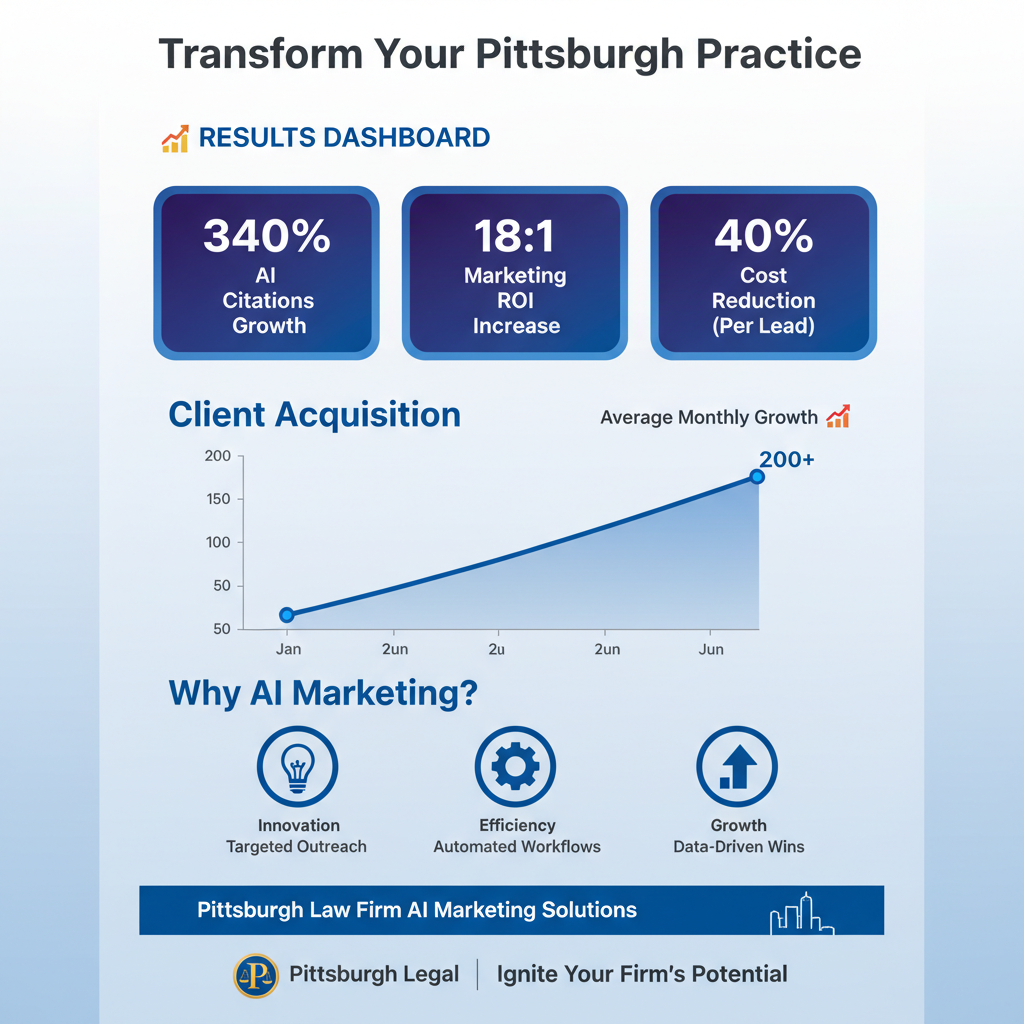
Success depends on consistent execution and measurement. Our geographic service expertise ensures Pittsburgh-specific optimization strategies that address local market conditions while maximizing AI platform visibility across all major platforms.
Frequently Asked Questions
Ready to Transform Your Pittsburgh Personal Injury, Criminal Law, Family Law, Corporate, Tax, Employment, Estate Planning, Immigration, or Bankruptcy Law Practice?
Get a free AI marketing assessment and discover how GEO can drive 340% more qualified client inquiries.
📞 (213) 282-3001 | ✉️ sales@intercore.net
📍 13428 Maxella Ave, Marina Del Rey, CA 90292
Conclusion: Your Next Steps to AI Marketing Dominance
Pittsburgh’s legal market stands at a critical inflection point. With only 19% of personal injury firms implementing AI-specific tools and individual AI adoption reaching 37% among personal injury professionals, the next 12-18 months represent a narrow window for establishing first-mover advantages in AI platform optimization.
The data is clear: firms implementing comprehensive GEO strategies achieve 18:1 to 21:1 ROI within 18 months, while competitors relying solely on traditional marketing struggle with the 184-day average payment cycles and increasing competition from 48,174 Pennsylvania attorneys. Our proven 60-day implementation roadmap ensures immediate visibility gains while building long-term competitive advantages.
This guide represents just the beginning of your AI marketing transformation. For comprehensive implementation and ongoing optimization, our geographic service expertise ensures Pittsburgh-specific strategies that address local market conditions while maximizing visibility across all major AI platforms. Contact InterCore Technologies today to begin your journey toward AI marketing dominance in Pittsburgh’s competitive legal landscape.